
Asbestos in Gold Coast Apartment Fire Doors: Why Your Locksmith Is Warning You Before Drilling
Posted by Jim Noort on 1st Mar 2026
“My locksmith is worried there may be asbestos in my apartment door… what’s up with that?”
If your unit entry door is a fire door (common on the Gold Coast), drilling for locks can become an asbestos and compliance issue. Here’s what your locksmith is looking at — and why.
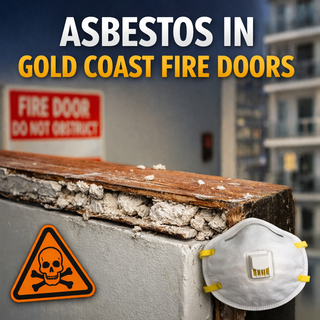
In Queensland apartments, the “front door” is usually a fire door set. Some fire doors (old and, in limited cases, newer supply chains) can involve asbestos risk if the core is disturbed.
So when a locksmith says, “I’m not drilling that until we check,” it’s not being difficult — it’s a risk control decision. Drilling, boring, morticing, enlarging holes, or cutting into a fire door can create two separate problems:
- Health / contamination risk (if asbestos fibres are released)
- Fire door compliance risk (fire doors are certified systems; uncontrolled penetrations can compromise performance)
This article clarifies: what your locksmith is looking for, what “white dust” does and does not mean, what Queensland guidance says, and what the safest next step usually is.
Why your unit entry door is often a fire door (Gold Coast apartments)
In all Queensland apartment buildings (Class 2 buildings), each unit needs to be fire-separated. That commonly means the main unit entrance is a fire resistant door set — not just a standard door leaf.
It’s the door leaf + frame + approved hardware (closer, hinges, latching hardware, seals, etc.). Changes to one part can affect the whole system.
That’s why locksmiths take a different approach on apartment doors than they would on a typical internal door.
What your locksmith is worried about
Some fire doors historically used asbestos-containing core/insulation materials. More recently, Queensland regulators also issued updates about certain fire doors manufactured using fire rated board (FRB) that was found to contain asbestos in a specific supply chain period.
An asbestos door can be “low risk” when intact and undisturbed, but become a higher risk job the moment you drill, cut, rout, or expose the core. Many lock installations require exactly those actions.
So your locksmith is trying to prevent an “easy lock job” becoming an asbestos disturbance event and/or a non-compliant fire door modification.
Telltale signs locksmiths check first (without drilling)
Important: there is no reliable “visual confirmation” of asbestos. These checks are about risk ranking before anyone disturbs the door.
1) The fire door tag / plate
A compliant fire door set is usually tagged. Your locksmith will photograph the tag because it can show the manufacturer, door rating details, and often the year of manufacture. A missing/illegible tag is a major red flag.
2) The top edge of the door (the “sandwich panel” clue)
Many fire doors are built with a skin–core–skin construction. If the top edge shows a “sandwich” structure and the core is visible, that can raise suspicion — especially if the core looks board-like or crumbly.

The top edge of this apartment fire door shows a visible sandwich construction (skin–core–skin). When the asbestos-based core material is disturbed by drilling or enlarging hardware cut-outs, it can create airborne fibre risk.
3) Exposed core at common failure points
Your locksmith will look (without scraping/sanding) for core exposure at:
- Top edge (especially if the door has been planed/trimmed)
- Bottom edge (damage, swelling, wear)
- Existing lock cavity / latch area (previous hardware changes can expose core)
- Overpanels above the door (sometimes fire-rated too, sometimes overlooked)
4) Door age is a clue — but not a guarantee
You’ll see “pre-1990” referenced a lot. In real building maintenance, doors can be installed years after manufacture, reused during refurbishments, or be non-standard. Your locksmith is (rightly) looking at the actual door in front of them, not just the building’s build year.
“What’s the risk if we just drill one hole?”
Risk 1: Fibres + contamination
If asbestos is present in the core/board, drilling or cutting can release fibres and contaminate the corridor, tools, clothing, vehicle, and nearby surfaces.
This is why “minor drilling” is not treated as minor when asbestos is suspected.
Risk 2: Fire door compliance compromise
Fire doors are tested systems. Extra holes, incorrect preparation, or unapproved hardware can compromise performance and create liability.
Even if asbestos is not present, uncontrolled modifications can still be a problem.
“We’ll drill first and see what the dust looks like” is the wrong order. If asbestos is present, drilling can create the exposure event you were trying to avoid.
“If it makes white powder, does that mean it’s asbestos?”
No. Dust colour is not a reliable test. Many non-asbestos fire-rated core materials can also produce pale dust.
Proper sampling and analysis by a NATA-accredited laboratory (or a lab approved/operated by Workplace Health and Safety Queensland). Queensland guidance also notes that handheld near-infrared tools are not an appropriate test method for identifying asbestos-containing materials.
Stop work. Don’t enlarge the hole, don’t “clean it up” with household vacuuming, and don’t keep machining the door. Treat as suspect until competent assessment/testing advises otherwise.
The material locksmiths worry about most: Low Density Asbestos Fibre Board (LDB)
Queensland asbestos guidance describes LDB as containing up to 70% asbestos by volume and notes it is softer than asbestos cement sheeting and can break up more easily when disturbed, increasing the likelihood of airborne fibre exposure. It is classified as friable asbestos-containing material and is generally handled under stricter controls.
Drilling, cutting, or morticing into friable asbestos materials can cause a significant release of fibres if not managed with appropriate controls. This is exactly the type of “small work” that can become a serious incident if the door core includes friable material.
This is why a locksmith might refuse to proceed without confirmation — especially if the core is visible and looks board-like/crumbly.
“Why doesn’t the building have an asbestos register?” (Gold Coast strata reality)
This is one of the most common frustrations for trades. In Queensland, asbestos register requirements are clear in workplace contexts — but strata is often messy in practice, and the right documents aren’t always available on the day.
If asbestos information is not available and the door has fire door/asbestos risk indicators, the safest approach is to pause work until the door is properly assessed. “No register” does not equal “no asbestos”.
If your locksmith is warning you about asbestos risk, pushing them to proceed shifts the risk onto occupants, cleaners, and future trades — not just the person holding the drill.

- Location of identified material (e.g. “Unit entry fire door – Level 3”)
- Material description (e.g. fire rated board / door core)
- Condition assessment (good, damaged, deteriorating)
- Risk classification
- Recommended control measures
- Date of inspection and review cycle
If your locksmith requests access to the asbestos register before drilling a fire door, this is standard due-diligence practice. Absence of a register does not confirm absence of asbestos.
Example shown for educational purposes. Registers must be kept up to date and accessible to contractors before maintenance work begins.
Are doors installed after 1990 asbestos-free?
In most cases, fire doors manufactured and installed from 1990 onward are unlikely to contain asbestos. By the early 1990s, asbestos use in building materials had largely ceased in Australia, and a full national ban followed in 2003.
However, “unlikely” does not mean “impossible.” In real building maintenance and refurbishment work, isolated exceptions do occur.
- Older doors installed during later refurbishments
- Stored stock used after manufacture date
- Non-compliant or undocumented supply chains
- Specific fire rated board contamination events identified by regulators
Post-1990 doors are generally lower risk, but visible core exposure, missing fire tags, damaged panels, or unknown history still justify caution. Drilling or modifying a fire door should only proceed once the asbestos risk has been reasonably assessed.
A cautious assessment before penetration is far safer than assuming compliance based solely on building age.
What to do next (if your locksmith raised asbestos concern)
- Confirm whether it’s a fire door set. Look for a fire door tag/plate. Photograph it.
- Do not drill “to check”. If the core is suspect, drilling is the disturbance event.
- Ask strata/building management for asbestos information. If it exists, it should be shared with trades before work starts.
- If the door is damaged and loose material is exposed, stop. Queensland fire door guidance indicates damaged doors exposing loose asbestos material require removal by certified asbestos removalists.
- If confirmation is needed, arrange competent assessment/testing. Proper sampling and lab analysis is the defensible pathway.
If your installation requires new holes (through-bolts, new spindle holes, larger morticing, new cable pass-throughs), asbestos risk must be resolved first. Complex retrofits should not be treated as simple DIY.
Official Queensland references (for strata records and due diligence)
- Queensland Fire Department – Fire Doors (Fire Resistant Door sets) information sheet (PDF)
- Workplace Health and Safety Queensland – Update on asbestos in fire doors
- WHSQ Alert – Imported asbestos fire door core (FRB supply chain update)
- Asbestos Queensland – Low density asbestos fibre board (LDB)
- Asbestos Queensland – Asbestos registers, access for trades, and testing guidance
- HWSA – Safety alert: asbestos in fire rated boards used in certain fire doors
Want a second opinion before anyone drills?
If you’re on the Gold Coast and your locksmith has raised an asbestos concern, we can help you risk-rank the door before work proceeds.
Send clear photos of:
- the fire door tag (door + frame if both are present)
- the top edge of the door (no scraping/sanding — just a photo)
- the existing lock/handle area (front + latch edge)
We’ll explain what the door likely is, what it likely isn’t, and what the safest next step is before any drilling happens.
Disclaimer: This article is general information only and is not asbestos removal advice. Asbestos identification requires competent assessment and/or laboratory testing. If you suspect asbestos, do not disturb the material and follow Queensland regulator guidance and site-specific procedures.