Pin Code
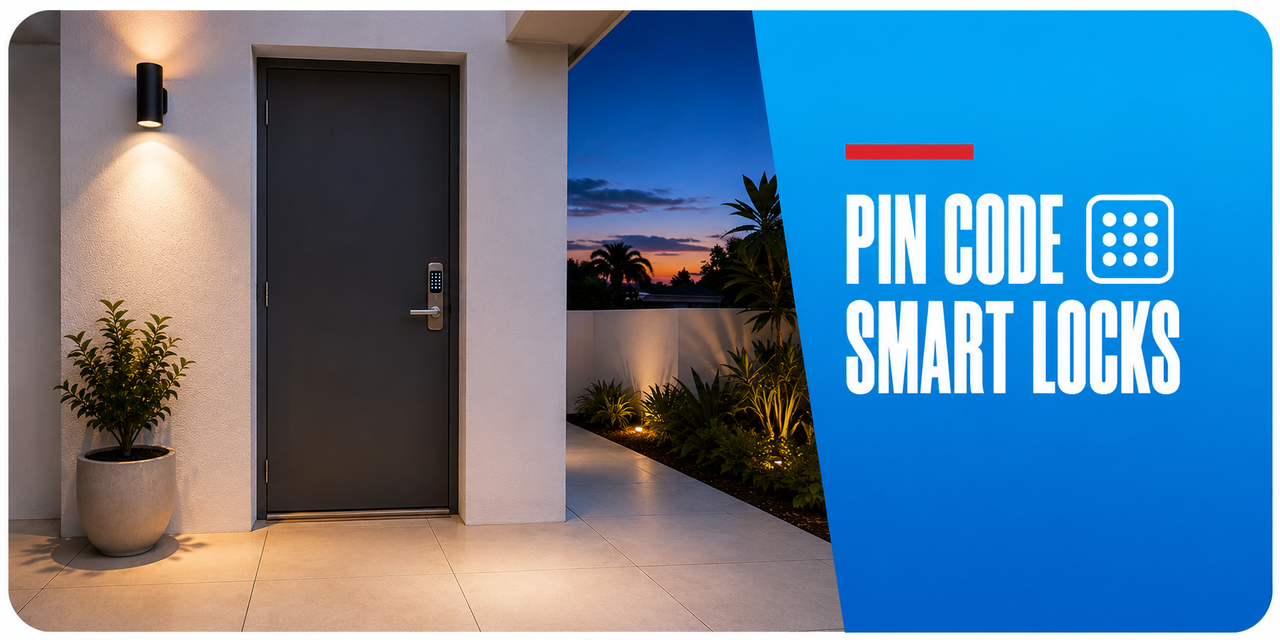
 PIN Code Smart Locks
Jump to the product listings ↓
The most universal access method, and the only one that works for someone you have never met. A PIN needs no enrolment, no hardware in the visitor's hand and no phone. What separates products is the range of code types the platform supports and how well the keypad survives outdoors.
Code types
Not every lock supports every type. Timed, one-time and cyclic codes are platform features. Confirm which are available before assuming. Passcode types by platform.
 What to check
- Code capacity — how many codes can exist at once, from around 20 on basic locks to hundreds on commercial platforms.
- Code length — four digits is common, six or more is better. Longer codes resist guessing and wear patterns.
- Anti-peek entry — allows random digits before and after the real code so an observer cannot read it.
- Keypad type — mechanical buttons give tactile feedback and survive heat; touch panels are cleaner but show wear patterns. Mechanical digital locks go further and need no battery at all.
- Lockout — the lock should disable entry temporarily after repeated wrong attempts.
- Backlighting — needed for any door used after dark.

Change the code when people leave, not on a schedule. Rotating codes for the sake of it trains everyone to write them down. If the platform supports timed codes, use those instead of sharing the permanent one. Passcode management in practice.
 Related categories
Fingerprint Smart Locks · Fob, Card and RFID · Digital Mechanical Locks · Keypads · By Access Method
 Common questions
How long should a PIN be?
Six digits or more where the lock allows it. Four-digit codes have only 10,000 combinations and, on a worn touch panel, the used digits are often visible, which cuts that number dramatically.
Six digits or more where the lock allows it. Four-digit codes have only 10,000 combinations and, on a worn touch panel, the used digits are often visible, which cuts that number dramatically.
Can I give a cleaner a code that only works on Tuesdays?
On platforms that support cyclic or scheduled codes, yes. This is one of the strongest arguments for choosing a lock on its platform rather than its hardware. A cleaner's cyclic code, step by step.
On platforms that support cyclic or scheduled codes, yes. This is one of the strongest arguments for choosing a lock on its platform rather than its hardware. A cleaner's cyclic code, step by step.
Do touch keypads wear out?
The panel itself rarely fails, but the finish shows wear on frequently used digits, which is a security problem rather than a functional one. Anti-peek entry and periodic code changes mitigate it. Mechanical buttons avoid the wear pattern but are more exposed to grit.
The panel itself rarely fails, but the finish shows wear on frequently used digits, which is a security problem rather than a functional one. Anti-peek entry and periodic code changes mitigate it. Mechanical buttons avoid the wear pattern but are more exposed to grit.
Will the keypad work in direct sun?
Heat is harder on keypads than rain. A west-facing door in a Queensland summer subjects the panel to sustained high temperatures. Check the operating temperature range for any lock in full sun. Sunlight and heat.
Heat is harder on keypads than rain. A west-facing door in a Queensland summer subjects the panel to sustained high temperatures. Check the operating temperature range for any lock in full sun. Sunlight and heat.
 Guides and reference
Ch 03 — PIN code access · Ch 14 — Passcode types · Ch 07 — Airbnb and short-stay · Ch 15 — Choosing a platform