

HID 125kHz ThinLine II Prox Reader - Charcoal Grey
At A Glance
 At A Glance
 DISPATCHSpecial Order - Contact Us
 125 kHz
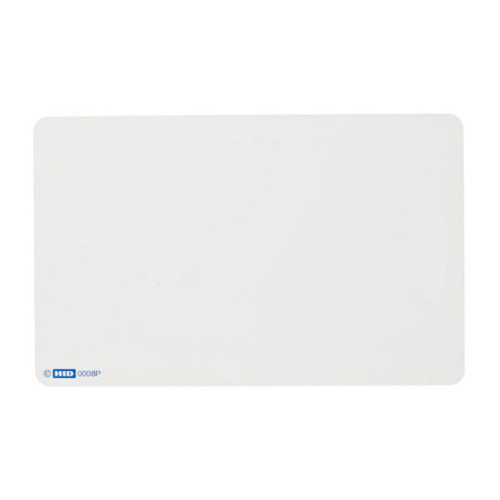
Prox Card
 Prox
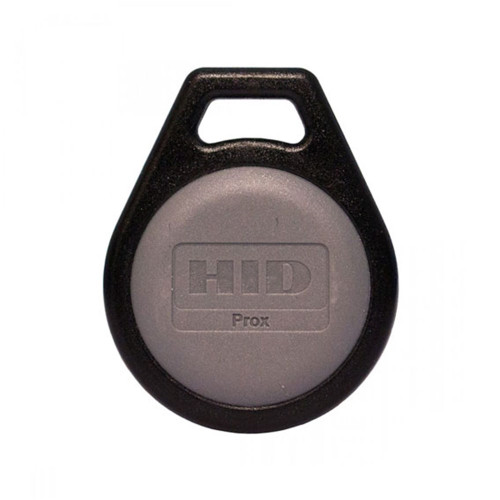
ProxKey Fob
AdhesiveProx Tag
13.56 MHz CardsNot Available
 PIN Code
Not Available
 Fingerprint
Not Available
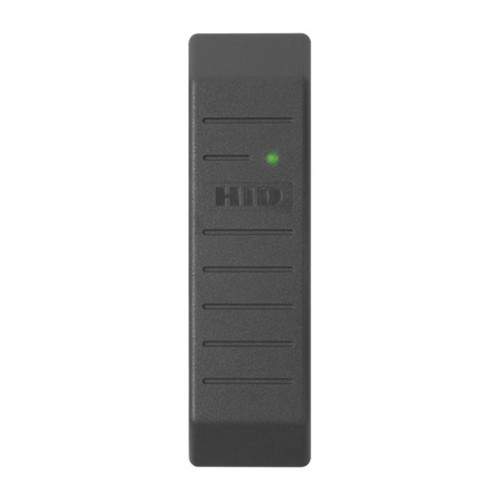
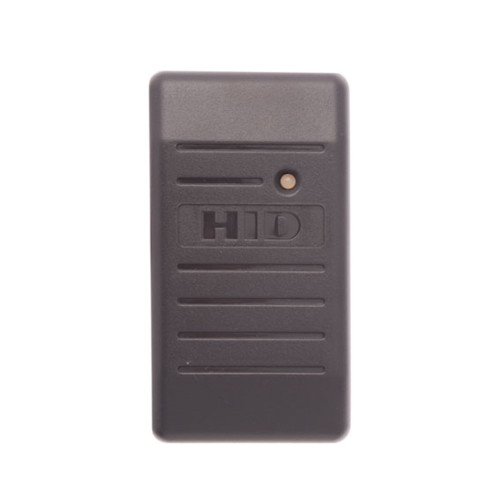
The HID ThinLine II Proximity Reader (5395CG100) is a low profile 125 kHz access control reader from HID. It is a slim wall reader - 119 mm high, 76 mm wide and 17 mm deep - made to mount on a single gang electrical box. This is the Wiegand model in HID's Classic Charcoal Grey cover, with a 0.46 m pigtail lead. It reads HID Proximity cards and fobs and has no keypad.
It is a reader, not a standalone controller. It must be wired to an access control panel and fed from a DC supply - the panel decides who gets in and drives the lock. HID specifies 5 to 16 V DC, and the label on its datasheet drawing reads 5-12 VDC, so a 12 V DC supply suits both. If you need a unit that controls a lock by itself, see the standalone options in the reader-only note below.
The ThinLine II suits a site that runs HID 125 kHz proximity cards and wants a neat wall reader beside the door. It reads a ProxCard II card at up to 14 cm. It does not read 13.56 MHz smart cards such as Seos, iCLASS or MIFARE unless the card also carries HID Prox. Its two-piece potted enclosure is IP55 rated for indoor or outdoor mounting, and it mounts on metal with minimal effect on read range. It is a special order item - contact us for an estimated dispatch time.

The ThinLine II is ordered in for you - contact us for an estimated dispatch time before you order. Need a reader sooner? The HID ProxPoint Plus mini mullion reader usually ships same day.

The ThinLine II has no lock relay and holds no users of its own. It passes the number on each card or fob to an access control panel, and the panel releases the electric strike, magnetic lock or other locking device. You also need a DC power supply and the cable run back to the panel - none of these are in the box. A 12 V DC supply suits - see Power, Wiring and Panel Connection before using more than 12 V DC. Looking for a unit that works on its own? The Neptune ACKPWB6K standalone keypad and the McGrath TGFP70 access control keypad both work as standalone keypads, and there are more in our keypads range. Not sure which way to go? Ask for a locksmith recommendation.
Access Methods
The ThinLine II reads HID's 125 kHz proximity credentials - cards, key fobs and adhesive tags. It has no keypad and no fingerprint sensor. A 13.56 MHz smart card is not read unless it also carries HID Prox. The Credential Compatibility table below lists typical maximum read ranges and the credentials we stock for it.
 Credential Compatibility and Read Range
Read range depends on the credential as much as the reader. These are HID's typical maximum figures for the ThinLine II, and they vary with installation conditions.
A proximity credential only opens a door once its card format, facility code and card number match what your access control panel expects. Tell us what your site uses before you order cards, fobs or tags, or send us a photo of an existing card and any numbers printed on it. HID Proximity readers are made for HID Proximity credentials: an Indala format credential needs an Indala compatible reader, and HID points EM cards to other readers - see page 44 of HID's ordering guide (PDF). HID's card figures for the ThinLine II are on page 2 of the ThinLine II datasheet (PDF). The fob and tag figures are from each credential's own datasheet - the MicroProx tag datasheet gives 6.4 cm where the reader datasheet gives 7.6 cm, and we show the lower figure.
 Key Features
- Low profile wall reader - 119 mm high, 76 mm wide and 17 mm deep.
- Single gang mounting - made to mount on a single gang electrical box.
- HID 125 kHz proximity - reads HID Proximity cards with formats up to 85 bits, plus key fobs and adhesive tags. See Credential Compatibility.
- Works on metal - mounts directly on metal with minimal effect on read range.
- Two-piece potted enclosure - weatherproof and IP55 rated, in rugged polycarbonate with a high degree of vandal resistance.
- Wiegand output for the access control panel.
- Wide supply range - 5 to 16 V DC, drawing 20 to 30 mA on average.
- Beeper and multicolour LED - as supplied, the LED rests red, and the reader beeps and flashes green when it reads a credential.
- Self-test at power-up - the reader checks its own configuration each time it powers up, and a loop-back test lets an installer check its inputs and outputs without extra test equipment.
- 0.46 m pigtail lead (18 inches), with optional hold and card present lines beside the LED and beeper inputs. See Power, Wiring and Panel Connection.
- Replaceable cover - HID makes Classic and Designer covers for it in other colours. See Accessories and Credentials.
- C-tick for Australia and New Zealand, and covered by HID's lifetime reader warranty.
 What's in the Box
- 1 x HID ThinLine II reader (5395CG100) with Classic Charcoal Grey cover and 0.46 m pigtail lead
- 2 x #6-32 x 1 inch self-tapping screws
- 1 x multilingual installation manual
The access control panel, DC power supply, cable, the electrical box, cards, fobs and tags are not included. HID's installation guide also recommends nine wire splices and a grommet for the job, which are not supplied. The two supplied screws are #6-32 self-tapping screws - check that they suit your electrical box before you install the reader, and have your own fixings ready if they do not.
 Suitable Uses
- Walls beside a door on a panel-based access control system - the reader mounts on a single gang electrical box.
- Sites already running HID 125 kHz proximity cards that need another reader, or a like-for-like replacement for a damaged ThinLine II.
- Office, tenancy and common-area doors where a card or fob is all that is wanted. See choosing a platform for commercial, office and retail sites.
- Metal surfaces - it mounts directly on metal with minimal effect on read range.
- External walls - the potted enclosure is IP55 rated for indoor and outdoor use, and the reader works from -30 to +65 deg C.

Standalone use without an access control panel - it cannot switch a lock on its own. Sites on 13.56 MHz smart cards such as Seos, iCLASS or MIFARE - the ThinLine II will not read them unless they also carry HID Prox; see the rest of the HID range. Indala or EM format 125 kHz cards and fobs - HID lists other readers for those; the ThinLine II is made for HID Proximity credentials. Doors that need a PIN or a fingerprint - there is no keypad and no fingerprint sensor; see our keypads and fingerprint ranges. Narrow door frames - at 76 mm wide this is a wall reader; for a mullion see the ProxPoint Plus or the HID MiniProx. Jobs that cannot wait - this is a special order item.
 Available Finish Options
 Charcoal Grey
(This Product)
STK 5395CG100
Finish selection does not affect functionality, compliance, or performance. This listing is HID's Classic cover in Charcoal Grey; HID makes other cover colours for the ThinLine II - see Accessories and Credentials.
 HID Proximity Reader Range
The ThinLine II is one of four HID 125 kHz proximity readers we list. All four read the same HID Proximity cards, fobs and tags; they differ in size, mounting and read range.
This product is the bold row. Card read range is HID's typical maximum with a ProxCard II card. The ProxPoint Plus and the MiniProx are mullion readers, the ThinLine II mounts on a single gang electrical box, and the MaxiProx is the long range reader for vehicle entry. Browse the rest of the HID range.
 Accessories and Credentials
HID makes replacement covers for the ThinLine II in its Classic and Designer styles. The Designer covers fit ThinLine II readers from model 5395C on, which includes this one. We do not list the covers - contact us with the part number for price and availability.
Cards, fobs and tags we stock for it
A proximity credential has to carry the card format, facility code and number range your panel expects, so tell us what your site uses before you order - browse all RFID fobs, tags and cards, or contact us with your existing card details and we will check what your site needs. The cover part numbers are on pages 32 and 33 of HID's ordering guide (PDF).
 Power, Wiring and Panel Connection
The reader runs from 5 to 16 V DC and connects to the panel through its 0.46 m pigtail lead. This part number is the Wiegand model - HID also makes a Clock-and-Data ThinLine II (5398), which we do not list.
Pigtail colour code

- Check every core against the colour code before powering up.
- Extra conductors may be needed in the cable if the panel is to control the LED or the beeper - HID's guide recommends a shielded 22 AWG cable with 5 to 9 conductors.
- HID's guide says that, for regulatory compliance, the drain wire should be disconnected at the power supply end of the cable, and that the reader is intended to be powered from a limited power source output of a certified power supply.
- Check that your panel's reader port is set for Wiegand, and for the card format your credentials carry, before the reader goes on the wall.
- HID's installation guide gives 35 mA as the maximum average current; the datasheet gives 30 mA average at 5 V DC, 20 mA at 12 V DC and up to 115 mA at peak. Size the supply on the peak.
- Allow 115 mA for each reader when you size a shared power supply.
- If your supply is above 12 V DC - a 13.8 V DC battery-backed supply, for example - check the label on the reader itself, or contact us, before you connect it.
 Full Specifications
 Dimensions
HID's drawing gives the reader as 76.2 mm wide, 119.4 mm high and 17.3 mm deep, and shows two pairs of fixing holes on the reader's centre line, 83.3 mm and 102.1 mm apart. Check them against your electrical box on site. HID's installation guide draws the same holes - the inner pair 83.3 mm apart, each outer hole 9.4 mm beyond - and shows the pigtail leaving the back of the reader 51 mm above the lowest hole. The outline drawing is on page 1 of the ThinLine II datasheet (PDF) and the fixing drawing on page 1 of HID's installation guide (PDF).
 Installation and Setup
- Choose the position - a single gang electrical box beside the door, with a cable path back to the panel.
- Join the pigtail to the panel cable using the colour code above.
- Fix the reader to the box with the two supplied screws, through its fixing holes - HID's drawing shows pairs 83.3 mm and 102.1 mm apart, so check them against the box first.
- Power up and test. The reader runs a self-test at power-up and the LED rests red. Present a card: the reader beeps and the LED flashes green.
- The ThinLine II mounts directly on metal with minimal effect on read range.
- The potted enclosure is IP55 rated for indoor and outdoor use. On an external wall, seal the cable entry behind the reader.
- Covers are replaceable. HID makes Classic and Designer covers for the ThinLine II in other colours - contact us to order one.
- Check the electrical box for depth and for a clear cable route before you fix the reader. The pigtail leaves the back of the reader 51 mm above the lowest fixing hole.
 Frequently Asked Questions
No. It reads the card or fob and passes its number to an access control panel, which makes the decision and releases the lock. You need a compatible panel with a Wiegand reader input and a DC supply - 12 V DC suits; HID specifies 5 to 16 V DC. If you want one unit that does it all, look at a standalone keypad such as the Neptune ACKPWB6K or the McGrath TGFP70 instead.
HID 125 kHz proximity credentials - ProxCard II and ISOProx II cards, the ProxKey III key fob and the MicroProx adhesive tag. It does not read 13.56 MHz smart cards such as Seos, iCLASS or MIFARE unless the card also carries HID Prox. An Indala format credential needs an Indala compatible reader, and HID lists other readers for EM cards. The Credential Compatibility table lists the credentials we stock.
A single gang electrical box. The reader is 119 mm high and 76 mm wide, and it mounts directly on metal with minimal effect on read range. HID's drawing shows fixing holes 83.3 mm and 102.1 mm apart - check them against your box.

Yes. HID rates the ThinLine II IP55 and seals it in a weatherised polycarbonate enclosure for indoor and outdoor use, and the reader works from -30 to +65 deg C. See our guide to IP ratings.
It varies, so contact us for an estimated dispatch time before you order - the ThinLine II is ordered in for you. If you need a reader sooner, the HID ProxPoint Plus mini mullion reader reads the same credentials and usually ships same day - it is a smaller mullion reader, and its card read range is up to 7.6 cm against the ThinLine II's 14 cm.
Additional Information
- Check your cards before you order. The ThinLine II reads HID 125 kHz proximity credentials and will not read a 13.56 MHz smart card unless it also carries HID Prox. If you are not sure what your cards are, send us a photo of the card and any numbers printed on it.
- Card format matters. A new card, fob or tag only works once its format, facility code and number range match what your panel expects. Have those details ready when you order credentials.
- Size the power supply on the peak. The ThinLine II averages 20 to 30 mA, but it draws up to 115 mA at peak. Allow 115 mA for each reader on a shared supply. HID recommends a linear supply.
- Replacing an older ThinLine II? HID's Designer covers fit readers from model 5395C on. They do not fit the earlier 5395A and 5395B readers.
- Planning a move to smart cards? 125 kHz proximity is HID's long-established card technology. HID's current readers take secure 13.56 MHz credentials, and some read 125 kHz as well, which lets a site change its readers first and its cards later. Browse the HID range or ask for a locksmith recommendation.
 Warranty
HID readers and credentials bought new through authorised channels are covered by HID Global's warranty against defects in materials and workmanship: lifetime cover on HID Signo, iCLASS SE and HID Proximity readers and on HID-branded Seos, iCLASS, Proximity, MIFARE DESFire and UHF cards, fobs and tags, and 2 years on iCLASS SE reader accessories. Proof of purchase required for all claims.
 Download PDF Resources
Two-page datasheet - overview, the outline drawing and the pigtail colour list on page 1, and the features and full specification table on page 2 with read range by credential, power, IP55 and certifications.
HID's two-page multilingual installation guide for these readers - the fixing hole drawings, the wiring colour code and the test steps on page 1; the parts list, HID's recommended extras, the electrical figures and the cover options on page 2.
HID ThinLine II Proximity Reader - FAQ, Setup and Owner's Guide
Everything below is here to help you choose, wire, set up and live with the HID ThinLine II reader. For general questions see our Smart Lock FAQ (Chapter 13), and for the bigger picture start with the Buyer's Guide.
Choosing the Right Reader
It is a low profile 125 kHz proximity reader that mounts on a single gang electrical box. It reads HID Proximity cards, fobs and tags, then passes their numbers to an access control panel over Wiegand. It is 119 mm high, 76 mm wide and 17 mm deep, runs on 5 to 16 V DC and is IP55 rated for indoor or outdoor mounting.
No. It has no relay to switch a lock and no user list of its own - it is one part of a wired access control system. The panel holds the users and releases the door. For a unit that works alone, see the Neptune ACKPWB6K standalone and Wiegand keypad, the McGrath TGFP70 access control keypad or the rest of our keypads.

Shape. The ThinLine II is a wall reader, 76 mm wide, for a single gang electrical box. The ProxPoint Plus and the HID MiniProx are narrow readers for door frames. The ThinLine II and the MiniProx read a ProxCard II card at up to 14 cm; the ProxPoint Plus reads it at up to 7.6 cm.
Yes. The HID MaxiProx reads a ProxCard II card at up to 60.9 cm and is made for parking and vehicle entry.
No. The ThinLine II is a card and fob reader. For a keypad see our keypads range; for fingerprint see our fingerprint range.
Cards, Fobs and Compatibility
HID 125 kHz proximity credentials. From our range that means the ProxCard II and ISOProx II cards on our HID 125 kHz proximity card listing, the HID ProxKey III key fob and the HID MicroProx adhesive tag.
No. Those are 13.56 MHz smart cards, and a 125 kHz reader will not see them unless the card also carries HID Prox. Some of HID's current readers take both technologies - browse the HID range.
It is made for HID Proximity credentials. HID's ordering guide points Indala format credentials to an Indala compatible reader and EM cards to other readers (page 44 of HID's ordering guide (PDF)), so check with us before you buy if that is what your site uses.
HID's typical maximum figures for the ThinLine II are 14 cm for a ProxCard II card, 12.7 cm for an ISOProx II card, 5 cm for a ProxKey III fob and 6.4 cm for a MicroProx tag. They vary with installation conditions.
Yes, if they are HID Proximity cards carrying an HID format. Whether the door then opens is up to the panel - the card's format, facility code and number have to be ones the panel knows. Send us a photo of a card if you are not sure what you have.

It is the way the number on a credential is laid out. HID's open 26-bit format, H10301, carries a facility code up to 255 and a card number up to 65,535; HID's other common formats include 35 and 37-bit layouts. New credentials have to be ordered in the format your panel is set up for. HID explains formats on pages 8 and 9 of its proximity catalogue (PDF).
It is the longest card number layout the reader can take. The reader recognises formats up to 85 bits, which covers HID's common 26-bit format and its longer ones.

No. It has no Bluetooth or NFC. For phone credentials see the rest of the HID range.
Power and Wiring
5 to 16 V DC by HID's specification table and its installation guide, and HID recommends a linear supply. The label on HID's datasheet drawing marks the red wire 5-12 VDC, so a 12 V DC supply suits both - check the reader's own label, or contact us, before connecting anything above 12 V DC. The reader averages 30 mA at 5 V DC or 20 mA at 12 V DC, and peaks at 110 mA at 5 V DC or 115 mA at 12 V DC.
Yes, if the panel takes Wiegand readers. Tell us the panel make and model and we will check it before you order.
Wiegand. HID's 5395 is the Wiegand ThinLine II; 5398 is the Clock-and-Data model, which we do not list.
Up to 150 m for Wiegand. HID recommends 22 AWG cable with at least five stranded conductors and an overall shield.
Red is the positive supply (marked 5-12 VDC on HID's drawing label) and black is ground. Green is Wiegand Data 0 and white is Wiegand Data 1. The drain wire is the shield ground. Orange and brown are the green and red LED lines, yellow is the beeper, blue is hold and violet is card present - those five are optional. The table is under Power, Wiring and Panel Connection.
Yes. The multicolour LED and the beeper can be under the reader's own control or the host panel's. As supplied - HID's configuration 00 - the beeper is on, the LED rests red and the reader itself flashes it green on a read. HID also builds configurations in which the host must drive the LED - contact us if your site needs one.
Installation and Mounting
On a single gang electrical box, through the reader's fixing holes. HID's drawing shows two pairs, 83.3 mm and 102.1 mm apart - check them against your box on site.
Two #6-32 x 1 inch self-tapping screws. #6-32 is an inch-series thread, so check that they suit your electrical box and have your own fixings ready if they do not. HID's guide also recommends nine wire splices and a grommet, which are not supplied.
Yes. HID says the ThinLine II mounts directly on metal with minimal impact on read range.
Yes. The ThinLine II is built with replaceable covers. HID makes Classic covers in Charcoal Grey, White, Beige and Black and Designer covers in Black, Charcoal Grey, Wave Blue and White. We do not list them, so contact us with the part number from the Accessories and Credentials table.
An area 119 mm high and 76 mm wide. If it is replacing an older reader or a switch, measure what the old fitting leaves showing before you order.
A security installer or locksmith. The reader is one part of a wired system and has to be matched to the panel - see when DIY is and is not appropriate, our advice and installation page and installation across the Gold Coast.
Setup and Operation
It beeps and its LED flashes from red to green. It then passes the card number to the panel, and the panel decides whether to release the door.
The reader runs an internal self-test that checks its configuration and whether the LED and beeper are under its own control or the panel's, then starts reading. A separate loop-back test lets an installer check the reader's outputs and inputs without extra test equipment.
The beep and green flash show the reader has read the credential. Usually the panel has not accepted it - check that the card is enrolled at the panel and that its format and facility code are the ones the panel expects. If those are right, have the data wiring between the reader and the panel checked.
First the card type - this reader reads HID 125 kHz proximity credentials. A 13.56 MHz smart card is not read unless it also carries HID Prox, an Indala format credential needs an Indala compatible reader, and HID lists other readers for EM cards. Then the power: check the DC supply on the red and black wires. If all of that is right, contact us.

No users, and nothing you set on site. Users, schedules and door settings all live in the access control panel. The reader's own behaviour - beeper on, LED resting red - is set at the factory.
Weather and Durability
Yes. The ThinLine II is sealed in a weatherised polycarbonate enclosure rated IP55, for indoor and outdoor use. On an external wall, seal the cable entry behind the reader.
-30 to +65 deg C, at up to 95 percent relative humidity, non-condensing. Long exposure to direct sun is hard on any electronic device - see how sunlight and heat affect lifespan.

It is a rugged polycarbonate enclosure that HID designs to withstand harsh environments and to give a high degree of vandal resistance.
Ordering, Compliance and Warranty
We order it in when you buy, so contact us for an estimated dispatch time first. The ProxPoint Plus and the MaxiProx usually ship same day.
5395 is the Wiegand ThinLine II, C is the revision, G is the Classic cover in Charcoal Grey, 1 is the 18 inch pigtail lead and 00 is the LED and beeper configuration - beeper on, LED normally red, green flash on a read. HID sets this out on page 29 of its ordering guide (PDF).

HID's datasheet lists C-tick for Australia and New Zealand among the ThinLine II's certifications, with UL294 / cUL, FCC, IC and CE. The full list is under Full Specifications.
HID's lifetime warranty for HID Proximity readers, against defects in materials and workmanship. Details are under Warranty.
Yes. Terry's offers site surveys and installation on the Gold Coast. Start with a site survey or our advice and installation page.
Related Products, Guides and Chapters
HID 125 kHz proximity readers: ProxPoint Plus Mini Mullion Reader | MiniProx Mullion Reader | MaxiProx Long Range Reader
HID 125 kHz credentials: Proximity Cards | ProxKey III Key Fob | MicroProx Adhesive Tag
Standalone keypads: Neptune ACKPWB6K | McGrath TGFP70
Browse: All HID products | Card and Fob Access | RFID Fobs, Tags and Cards | Keypads | Fingerprint
Buyer's Guide chapters: Ch 03 Access Methods | Ch 10 Commercial Brands | Ch 11 Standards and IP Ratings | Ch 12 Installation | Ch 13 Smart Lock FAQ
Helpful reading: Platforms for Commercial, Office and Retail | Site Survey and Installation | How Long Do Digital Door Locks Last?
PDF Files - HID ThinLine II Proximity Reader
Two-page datasheet - overview, the outline drawing and the pigtail colour list on page 1, and the features and full specification table on page 2 with read range by credential, power, IP55 and certifications.
HID's two-page multilingual installation guide for these readers - the fixing hole drawings, the wiring colour code and the test steps on page 1; the parts list, HID's recommended extras, the electrical figures and the cover options on page 2.
HID's catalogue for its 125 kHz range (2012 revision) - the ThinLine II on page 4, the reader comparison chart on pages 6 and 7 and card formats explained on pages 8 and 9. Some of its chart figures differ from the reader's own datasheet, which this page follows.
Two-page datasheet for the ProxKey III fob, with its typical maximum read range on HID's proximity readers - up to 5 cm on the ThinLine II.
Two-page datasheet for the adhesive MicroProx Tag, with its typical maximum read range on HID's readers - up to 6.4 cm on the ThinLine II - and HID's notes on where the tag can be used.
HID's ordering guide. Page 29 sets out the ThinLine II part number - colour, pigtail, LED and beeper configuration - and pages 32 and 33 list the replacement covers.
HID Warranty
HID branded readers, credentials and accessories are covered by warranties issued by HID Global Corporation and its affiliated entities (part of ASSA ABLOY), distributed in Australia by LSC. Most HID readers and HID-branded credentials carry lifetime cover; a small number of specific models and accessories carry a fixed term instead.
The summary below sets out HID's published warranty structure. All warranty claims are handled by Terry's Tradies Pty Ltd and its associated websites, trading names, and subsidiaries. Full terms and exclusions are set out in the official HID Global Warranty Policy linked at the base of this page.
Warranty Summary
Understanding "Lifetime" Cover
HID's published policy uses the term "Lifetime Warranty Period" without defining it further - it is not stated as a fixed number of years, "for the life of the product", or "as long as you own it". It applies for as long as HID continues to honour that stated period under its published policy.
How to Make a Claim
- Contact Terry's Tradies Pty Ltd and its associated websites, trading names, and subsidiaries with your proof of original purchase and a description of the fault.
- Where a claim needs to be escalated, HID requires written notice from the end customer within the applicable warranty period - we handle this notification on your behalf.
- HID's remedy, at its own option, is to repair the product, replace it, or issue a credit towards a future purchase.
- Postage, insurance and shipping costs to present hardware for warranty assessment are the end customer's responsibility under HID's policy - we'll advise what's needed before anything is sent.
 Exclusions
This warranty does not cover, and will be voided by, any of the following:
- Installation by anyone other than HID or an HID-authorised installer
- Use other than as authorised in HID's own documentation
- Modification, alteration or repair by a party other than HID
- Combination with hardware, operating systems or tools not provided by HID
- Accident, neglect, misuse or negligence
- Upgrades, evaluation units and demonstration units
- Consumables - batteries, paper, pads, cleaning solution, towels, cartridges and cables
Important Notes
This manufacturer warranty applies in addition to your rights under the Australian Consumer Law. Our goods come with guarantees that cannot be excluded under the ACL. You are entitled to a replacement or refund for a major failure and to compensation for any other reasonably foreseeable loss or damage. Where a failure does not amount to a major failure, you are entitled to have the goods repaired or replaced.
HID's published policy states the warranty is solely for the benefit of the original end customer. Products purchased through Terry's Tradies Pty Ltd and its associated websites are covered as supplied - contact us in the first instance for any claim rather than approaching HID directly.
A small number of HID accessories (such as certain Signo mounting plates and wall spacers) are not individually named in HID's published policy. Where this applies, contact us to confirm the term that applies to your specific item before relying on the Lifetime cover shown above for readers.

Confused? Overwhelmed? We get it.
Choosing the right smart lock can be genuinely tricky - door types, backsets, app platforms, compatibility with your existing hardware... there is a lot to consider. We have decades of experience fitting locks of all types, including smart locks, and we are happy to help.
Our expert recommendation service is free. Upload a few photos of your door and describe what you need, and one of our qualified locksmiths will give you a personalised recommendation.
Get Your Free Recommendation →How it works - three easy steps:
1. Upload photos
A few clear shots of your door, lock and frame - inside and out.
2. We assess
Our locksmith reviews your setup and requirements - door type, weather exposure, how you want to use it.
3. You get a recommendation
A personalised recommendation tailored to your door, budget and needs. No pressure, no upsell.
Also useful while you are deciding: