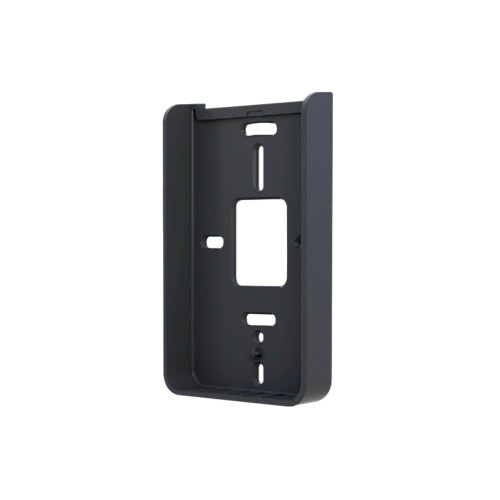


HID Signo 20 Series Reader - Black
At A Glance
 At A Glance
 DISPATCHSame Day Before 11am
 Seos Card or Fob
  Phone
Phone(Bluetooth or NFC)
 iCLASS / MIFARE
(Smart + Standard)
125 kHz Prox(Standard Only)
 PIN Code
Not Available
 Fingerprint
Not Available
The HID Signo 20 Series Reader (20NKS0100001H and four sister part numbers) is a slim mullion access control reader from HID. At 45 mm wide it is made for door frames and mullions, and it will mount on any flat surface. It reads cards and fobs and accepts phones over Bluetooth or NFC. There is no keypad - for a card or phone plus a PIN, see the Signo 20K keypad reader.
It is a reader, not a standalone controller. It must be wired to an access control panel over OSDP or Wiegand and fed from a 12 V DC supply - the panel decides who gets in and drives the lock. If you need a unit that controls a lock by itself, see the standalone options in the reader-only note below.
This listing is the black reader in three credential profiles - Seos, Smart and Standard - with a pigtail lead or a terminal strip. The profile sets which cards the reader accepts, and only the Standard Profile reads 125 kHz proximity cards and fobs, so check the profile table before you order. The housing is IP65 rated for indoor or outdoor mounting and the reader carries the RCM mark for Australia and New Zealand. The same reader in white is a separate listing.
Usually ships same day if ordered before 11am AEST (excludes weekends and Queensland public holidays).

The Signo 20 has no lock relay and holds no users of its own. It passes each card or phone to an access control panel, and the panel releases the electric strike, magnetic lock or other locking device. You also need a 12 V DC power supply and the cable run back to the panel - none of these are in the box. Looking for a keypad that works on its own? The Neptune ACKPWB6K standalone keypad and the McGrath TGFP70 access control keypad both work as standalone keypads, and there are more in our keypads range. Not sure which way to go? Ask for a locksmith recommendation.
Access Methods
What the reader accepts depends on the credential profile you order. Every profile reads Seos cards and fobs, and phones. The Smart and Standard profiles add more card types.
 Credential Profiles and Part Numbers
Five part numbers sit on this listing - three credential profiles in black, with a pigtail lead or a terminal strip. The profile is the set of card technologies the reader accepts, and it is part of the part number. Pick the connection type and the profile from the option lists when you order. The Smart Profile comes with a pigtail lead only.
Running a mixed or older card population? The Standard Profile is the safe choice while you migrate. Moving everyone to Seos or phones? The Seos Profile accepts nothing else. If your site is on HID's Elite (site-specific keys) or Corporate 1000 (managed card format) program, tell us before you order so the reader and credentials can be matched to it. See HID's own profile chart on page 1 of the Signo ordering guide (PDF).
 Key Features
- Slim mullion reader - 45 mm wide, made for door frames and mullions, and at home on any flat surface.
- Wide credential support - Seos, iCLASS, MIFARE DESFire and 125 kHz proximity depending on the profile, which makes it a practical way to move a site from old cards to new ones.
- Phones as credentials - HID Mobile Access over Bluetooth and NFC is built in, including Apple's Enhanced Contactless Polling for credentials in Apple Wallet.
- OSDP out of the box for supervised, two-way communication with the panel, including OSDP Secure Channel. Wiegand and Clock-and-Data are also built in for older panels.
- Pigtail or terminal strip - order it with a 0.46 m pigtail lead, or with HID's flush-mount terminal strip, where the panel cable lands on the reader itself.
- Keys held in secure hardware - cryptographic keys are stored on an EAL5+ certified secure element, and the reader supports HID's Secure Identity Object (SIO), Elite Key and Corporate 1000 programs.
- Velocity checking - a patented HID feature that guards against rapid brute-force electronic attacks.
- Surface detection - the reader senses a metal mounting surface and recalibrates itself for the best read range it can get.
- IP65 rated for indoor or outdoor mounting, with no extra gasket needed.
- Tamper output that signals the panel if the reader is taken off its mounting plate, plus a hold input.
- Managed from a phone or the panel - set up and change settings with the HID Reader Manager app or over OSDP, update firmware with Reader Manager, and switch off older card technologies once a migration is finished.
- Intelligent Power Management - an optional mode that cuts the current the reader draws while it is idle.
- RCM marked for Australia and New Zealand, and covered by HID's lifetime reader warranty.
 What's in the Box
- 1 x HID Signo 20 reader with mounting plate in silver trim - with a 0.46 m pigtail lead or a terminal strip, as ordered
- 1 x installation guide
- 2 x 0.138-20 x 1.5 inch self-tapping screws - for fixing straight to a wall or frame with no junction box
- 3 x 0.138-32 x 0.375 inch machine screws - two for an imperial junction box, one to fix the reader to its mounting plate
- 2 x M3.5 x 12 mm machine screws - for a metric junction box
- 1 x 0.138-32 x 0.375 inch security screw - the anti-tamper alternative for fixing the reader to its mounting plate
- 2 x 5-pin terminal connectors - with the terminal strip part numbers only
The access control panel, 12 V DC power supply, cable, junction box, the HID 04-0001-03 security tool for the anti-tamper screw, and a wall spacer for metal surfaces are not included.
 Suitable Uses
- Aluminium-framed and narrow-stile doors on a panel-based access control system - the 45 mm body sits on a door mullion or frame where a wall switch size reader will not fit. Check the frame first - see how to measure stile width.
- Office, tenancy and common-area doors where a card, fob or phone is all that is wanted - commonly specified in Australian commercial sites for tenancy entries, secure corridors and shared amenities. See choosing a platform for commercial, office and retail sites.
- Sites moving from 125 kHz proximity cards to Seos or phones - a Standard Profile reader reads the old and the new while cards are swapped over.
- Upgrades from older Wiegand readers to OSDP. HID names the Signo 20 in Standard Profile as the compatible Signo model for its older iCLASS SE R10 and R15 readers - we stock the HID iCLASS SE R15.
- External doors and gates exposed to weather - the housing is IP65 rated.
- Sites rolling out mobile credentials now or later - Bluetooth and NFC are already in the reader.

Standalone use without an access control panel - it cannot switch a lock on its own. Doors that need a PIN - there is no keypad; use the Signo 20K keypad reader instead. Doors that need a fingerprint - see the RKLB40 biometric reader or our fingerprint range.
 Available Finish Options
 Black
Black
(This Product)
STK 20NKS0100001H
STK 20TKS01000000
STK 20NKS020002BL
STK 20NKS00000000
STK 20TKS00000000
Finish selection does not affect functionality, compliance, or performance. Black is this listing; the white reader is a separate listing and comes with a pigtail lead only. Both colours sit on a silver trim baseplate.
 HID Signo Reader Range
This product is the bold row. All five models share the same Signo platform - credential support, OSDP and Wiegand, IP65 housing and HID Reader Manager setup. They differ mainly in size, keypad and connection.
 Accessories and Credentials
Cards, fobs and tags we stock for it
Programmed credentials are made to your site's card format, facility code and number range, so they need to match the system the reader is wired to. Browse all RFID fobs, tags and cards, or contact us with your existing card details and we will match them.

 HID Mobile Access
Every Signo 20 on this listing can read a phone as a credential. HID Mobile Access is powered by Seos and talks to the reader over Bluetooth or NFC. The HID Mobile Access app runs on Android 7 and iOS 14 or later.
- Two ways to open: Tap the phone on the reader like a card, or use HID's Twist and Go gesture from up to 2 m away.
- No need to open the app at the door - Mobile IDs can also be protected by the phone's lock screen.
- Apple Wallet: the reader supports Apple's Enhanced Contactless Polling for credentials held in Apple Wallet.
- What else you need: Mobile IDs and an HID Origo portal account. Mobile IDs are issued and revoked over the air from the portal and come in product tiers and subscription terms. They are a separate purchase, not part of the reader.
- Phone requirement: HID Mobile Access version 3.0.0 or later on a phone with Bluetooth 4.2 or later.
New to phone credentials? Compare the access methods side by side in our Buyer's Guide, and see the HID Mobile Access datasheet (PDF).
 Power, Wiring and Panel Connection
The reader runs from 12 V DC and connects to the panel through a 0.46 m, 10-wire pigtail lead or a 10-way terminal strip, depending on the part number. It speaks OSDP over RS-485, Wiegand or Clock-and-Data - the choice is a reader setting, not a different part number.
Pigtail colour code and terminal numbers

- Wiring the reader incorrectly can permanently damage it - check every core before powering up.
- Replacing an older HID iCLASS reader on OSDP? Its RS-485 A and B were the other way around. Wire the Signo to the table above, not to the old reader's colours.
- The Wiegand Data 0 and Data 1 cores can be reused for OSDP, but ordinary Wiegand cable may not meet the twisted pair recommendation for RS-485.
- On OSDP runs longer than 61 m, or where there is electrical interference, fit a 120 ohm resistor across the RS-485 termination ends.
- The two tamper wires are interchangeable, and either one can share the reader ground to save a cable core.

 Full Specifications
 Dimensions
The body is 45 mm wide, sized for a door mullion. Add 25.4 mm to the depth if you fit the Signo wall spacer. Need a keypad on the same narrow body? See the Signo 20K.
 Installation and Setup
- Fix the mounting plate to the junction box or frame with the supplied screws - the imperial pair for an imperial junction box, the M3.5 x 12 mm pair for a metric one, or the two self-tapping screws straight into the frame or wall.
- Wire the pigtail or terminal strip to the panel cable using the colour code above.
- Hook the reader onto the top of the plate, swing the bottom in and fix it with the standard screw or the anti-tamper security screw.
- Power up and test. The reader beeps and its LED flashes at power-up, and again when you present a credential.
- Mount it on a flat, stable surface. An uneven surface can compromise the IP65 seal and the tamper switch.
- On or near metal - including a metal junction box or an aluminium door frame - fit a wall spacer for the best read range.
- Use the supplied screws. Other fixings can damage the reader or its plate.
- The reader is static sensitive - handle it as you would any electronic board.
- On a mullion, check the cable route and the clearance inside the frame before you fix the plate.
- Settings such as LED and beeper behaviour are changed with the HID Reader Manager app, or from the panel over OSDP. Firmware is updated with Reader Manager.
 Frequently Asked Questions
No. It reads the card or phone and passes it to an access control panel, which makes the decision and releases the lock. You need a compatible panel (OSDP or Wiegand) and a 12 V DC supply. If you want one unit that does it all, look at a standalone keypad such as the Neptune ACKPWB6K or the McGrath TGFP70 instead.
Match it to the cards your site uses. Seos Profile reads Seos cards and phones only. Smart Profile adds iCLASS and SIO-encoded MIFARE cards. Standard Profile reads all of those plus 125 kHz proximity cards, so it is the one to pick if any older HID Prox, Indala, AWID or EM cards are still in use. The profile table lists the part number for each.
Yes. Every profile reads HID Mobile Access Mobile IDs over Bluetooth or NFC. The reader is ready for it, but you also need Mobile IDs and an HID Origo portal account, which are separate from the reader. See HID Mobile Access.

Yes. The housing is IP65 rated and rated for indoor and outdoor use, with an operating range of -40 to +66 deg C. Mount it on a flat surface so the seal sits properly, and use a wall spacer if the surface is metal.

It works with panels that take OSDP over RS-485, Wiegand or Clock-and-Data readers. OSDP gives supervised, encrypted two-way communication; Wiegand suits older panels. If you are swapping out an older iCLASS reader, note the RS-485 A and B wires are reversed on the Signo. Tell us the panel make and model and we will confirm it before you order.
Additional Information
- Order the profile to suit the cards, not the price. A Seos Profile reader will not read an iCLASS or 125 kHz card, and the profile is part of the part number. If you are not sure what your cards are, send us a photo of the card and any numbers printed on it.
- Elite and Corporate 1000 sites: HID's Elite program gives a site its own authentication keys, and Corporate 1000 gives it a managed card format. Tell us if your site is on either, so the reader and the credentials can be matched to it.
- Metal surfaces cut read range. The reader recalibrates itself on metal, but HID still recommends a spacer. The 25.4 mm wall spacer comes in black or silver.
- Tamper circuit voltage: HID rates the tamper relay at 0 to 60 V DC on its current datasheet and 0 to 12 V DC in the installation guide. Keep the tamper circuit at 12 V DC or less and you are inside both. The two also differ on the cold limit - the datasheet says -40 deg C, the guide -35 deg C.
- Pigtail or terminal strip is chosen when you order. It is set by the part number, not by a setting. Both carry the same ten connections; the Smart Profile comes with a pigtail lead only.
 Warranty
HID readers and credentials bought new through authorised channels are covered by HID Global's warranty against defects in materials and workmanship: lifetime cover on HID Signo, iCLASS SE and HID Proximity readers and on HID-branded Seos, iCLASS, Proximity, MIFARE DESFire and UHF cards, fobs and tags, and 2 years on iCLASS SE reader accessories. Proof of purchase required for all claims.
 Download PDF Resources
Two-page datasheet for the Signo range - key benefits on page 1 and the full specification table on page 2, with a column for the 20.
HID's own ordering guide for the Signo line - the credential profile matrix on page 1, the reader part-number structure, and the mounting plate and wall spacer part numbers.
Supplied parts, electrical specifications and cable lengths, tamper and hold options, mounting, the pigtail and terminal wiring table, keypad facility code set-up and regulatory statements including the RCM mark.
Eight-page overview of the Signo platform - credential support, security features, installation and management, and mobile access.
How HID Mobile Access works - opening modes, supported phones, the HID Origo portal and what a site needs to use phones as credentials.
HID Signo 20 Reader - Black - FAQ, Setup and Owner's Guide
Everything below is here to help you choose, wire, set up and live with the HID Signo 20 reader. For general questions see our Smart Lock FAQ (Chapter 13), and for the bigger picture start with the Buyer's Guide.
Choosing the Right Reader
It is a slim mullion access control reader. It reads cards, fobs and phones, then passes them to an access control panel. It is 45 mm wide, 121.5 mm long and 19.5 mm deep, runs on 12 V DC and is IP65 rated for indoor or outdoor mounting.
No. It has no relay to switch a lock and no user list of its own - it is one part of a wired access control system. The panel holds the users and releases the door. For a unit that works alone, see the Neptune ACKPWB6K standalone and Wiegand keypad, the McGrath TGFP70 access control keypad or the rest of our keypads.
They are the same platform in different bodies. The Signo 20K is the same 45 mm wide mullion body with a 2 x 6 touch keypad. The Signo 40 is a wall switch size reader with no keypad, and the Signo 40K adds a 3 x 4 touch keypad to it. The Signo 40T has mechanical buttons instead of a touch keypad and connects by terminal strip.
The profile is the set of card technologies the reader accepts. Seos Profile reads Seos credentials and Mobile IDs only. Smart Profile adds iCLASS, iCLASS SE, iCLASS SR and SIO-encoded MIFARE Classic and DESFire cards. Standard Profile is the widest - it also reads 125 kHz HID Proximity, Indala, AWID and EM cards. All three are sold on this page in black. The Seos and Standard profiles come with a pigtail lead or a terminal strip; the Smart Profile with a pigtail lead.
Yes - it is a separate listing. The white reader comes in all three profiles with a pigtail lead, and it is a special order. Colour aside, the two readers work the same way, and both sit on a silver trim baseplate.
The Signo has Bluetooth for phones built in, where iCLASS SE needs an extra module for it. OSDP is built into the Signo's base hardware, and its housing is IP65 against IP55. HID names the Signo 20 in Standard Profile as the compatible model for the iCLASS SE R10 and R15 - see its ordering guide (PDF). The HID reader platforms chart (PDF) sets the two out side by side. We also stock the iCLASS SE R15 reader.

Step up to the Signo 20K - the same narrow body with a 2 x 6 touch keypad. It costs more, and it is listed by profile: Signo 20K - Seos Profile, Signo 20K - Smart Profile, Signo 20K - Standard Profile.
Cards, Fobs and Credentials
That depends on the profile. Across the range the Signo 20 reads Seos, iCLASS SE, iCLASS SR, iCLASS, MIFARE Classic, MIFARE DESFire EV1, EV2 and EV3, FeliCa and CEPAS at 13.56 MHz, and HID Proximity, Indala, AWID and EM at 125 kHz. The Seos and Smart profiles read fewer of those - see the profile table on the main tab. Background on how RFID cards and fobs work is in Chapter 03.
Only the Standard Profile reader will. The Seos and Smart profiles do not read 125 kHz proximity. If you have HID 125 kHz cards, ProxKey fobs or MicroProx tags in use, order the Standard Profile.
Yes. Seos is compatible with all HID Signo readers without any extra reader configuration, so Seos cards, Seos clamshell cards and the Seos key fob work on all three profiles.
Signo readers read HID's MIFARE DESFire EV3 cards. The EV3 high security application needs reader firmware 10.0.2.2 or later; on the 801 card, readers with older firmware read the EV1-compatible application instead. The Seos Profile does not read DESFire cards at all, and on the Smart Profile it depends on how the card is encoded, so check with us before ordering DESFire cards for a Smart Profile reader. The detail is in the DESFire EV3 application note (PDF).
Typically 4 to 10 cm for a standard card or clamshell card. HID measures that in open air. The shape of the credential matters - small tags and fobs can read at a shorter distance - and a metal surface shortens the range unless a spacer is fitted.

Yes. Programmed HID credentials are made to your card format, facility code and number range. Contact us with your current card details, or browse RFID fobs, tags and cards.
Phones and Mobile Access
With HID Mobile Access. A Mobile ID is sent to the user's phone, and the phone presents it to the reader over Bluetooth or NFC. Users can tap the phone on the reader like a card, or twist the phone as they approach - HID calls this Twist and Go, and it works from up to 2 m.
Mobile IDs, an HID Origo portal account to issue and revoke them, and the HID Mobile Access app on each phone. Mobile IDs come in product tiers and subscription terms and are a separate purchase from the reader.
The HID Mobile Access app supports Android 7 and iOS 14 or later.
For Bluetooth, the phone needs Bluetooth 4.2 or later and HID Mobile Access version 3.0.0 or later.
The reader supports Apple's Enhanced Contactless Polling, which is what lets it read an access credential held in Apple Wallet. HID supports mobile credentials in Google Wallet as well, on its mobile-enabled readers including the Signo line. HID notes that wallet availability varies by country, so talk to us before you plan a deployment around one wallet in particular.
No. HID Mobile Access works without the app being opened first. Mobile IDs can also be set so the phone must be unlocked before they are used.
Wiring, Power and Panels
Use OSDP if your panel supports it. It runs over two RS-485 wires, is supervised in both directions and can be encrypted with OSDP Secure Channel. It also lets the panel configure the reader. Wiegand is one-way and unencrypted, and is there for panels that do not speak OSDP.
12 V DC from a certified power-limited supply. Allow 250 mA peak per reader. Normal standby draw is 60 mA, or 30 mA in Intelligent Power Management mode.
Both carry the same ten connections. The pigtail version has a 0.46 m lead that is joined to the panel cable behind the reader. On the terminal strip version the panel cable lands on the reader itself, and HID describes it as a flush mount option. It is set by the part number, so choose it when you order - and on this listing the Smart Profile comes with a pigtail lead only.
On Wiegand, up to 152 m on 18 AWG cable or 91 m on 20 AWG. On RS-485 (OSDP) the bus can be up to 1,219 m long, with up to 500 m between nodes, on 24 AWG.
Usually, but check two things. Earlier iCLASS readers had the RS-485 A and B connections reversed, so wire the Signo by its own colour table. And if you are moving from Wiegand to OSDP, ordinary Wiegand cable may not be the twisted pair that RS-485 wants.

It is on by default. The tamper circuit is normally closed and opens when the reader is taken off its mounting plate, so the panel can raise an alarm. The two tamper wires are interchangeable, and either can share the reader ground.
When the panel asserts the hold line, the reader either buffers a card read until the line is released (the default) or stops reading cards, depending on how it is configured.
Mounting and Weather
It is made for door mullions and frames, and it mounts on any flat surface. The mounting plate fixes to a junction box or straight to the surface. Imperial and metric junction box screws and self-tapping screws are in the box.
The body is 45 mm wide and 121.5 mm long. Measure the flat face of the frame or mullion, and check the cable route inside it, before you order - see how to measure stile width.
It is IP65 rated with no extra gasket, and rated for outdoor use from -40 to +66 deg C. Mount it on a flat, stable surface so the seal and tamper switch work as intended. For how sun and heat affect electronics over time, see sunlight and heat.
Fit one if the reader goes on or near metal, including a metal junction box or an aluminium door frame - HID recommends it for the best read range. The Signo wall spacer for 20 and 20K readers is 25.4 mm deep and comes in black or silver. Silver is a special order.
Yes - the HID Signo 20 mounting plate in black (20KMP). The reader ships with a silver plate, so the black plate changes the trim colour as well as serving as a spare.
Setup and Management

With the HID Reader Manager app on a phone, or from the panel over OSDP. You can change the output format, the LED and beeper behaviour, and which credential technologies are switched on.
Yes, in the field, without taking the reader off the door frame. Firmware can be updated in response to new security threats, and it is loaded with HID Reader Manager.

Its cryptographic keys sit in EAL5+ certified secure element hardware. It supports OSDP Secure Channel to the panel, HID's Secure Identity Object for the credential data, and velocity checking against rapid brute-force attempts. Once every user is on a secure credential, older card technologies can be switched off.
Compliance and Warranty

Yes. It carries the RCM mark for Australia and New Zealand. HID's country list shows the RCM approval for the Signo 20 on page 1 (Australia) and page 4 (New Zealand).
HID Signo readers carry HID's lifetime warranty against defects in materials and workmanship. It does not cover incorrect installation, unauthorised modification or misuse. Keep your proof of purchase and contact us if a reader fails. Your rights under the Australian Consumer Law apply as well.
Terry's offers site surveys and installation on the Gold Coast. Start with a site survey or our advice and installation page.
Related Products, Guides and Chapters
HID Signo readers: Signo 20 - White | Signo 20K - Seos Profile | Signo 20K - Smart Profile | Signo 20K - Standard Profile | Signo 40 | Signo 40K | Signo 40T
Signo 20 accessories: Signo 20 Mounting Plate | Signo Wall Spacer for 20 and 20K
Other HID readers: iCLASS SE R15 Reader | iCLASS SE RKLB40 Biometric Keypad Reader
HID credentials: Seos Card | Seos Clamshell and ISO Cards | Seos Key Fob | iCLASS Card | iCLASS Key Fob | iCLASS Tag | iCLASS SE Key II Fob | MIFARE DESFire EV3 Card | 125 kHz Card | ProxKey Fob | MicroProx Tag
Browse: All HID products | Card and Fob Access | Bluetooth | Keypads | RFID Fobs, Tags and Cards | Doors with Narrow Frames
Buyer's Guide chapters: Ch 02 Measuring Stile Width | Ch 03 Access Methods | Ch 10 Commercial Brands | Ch 11 Standards and IP Ratings | Ch 12 Installation | Ch 13 Smart Lock FAQ
Helpful reading: Platforms for Commercial, Office and Retail | Site Survey and Installation | How Long Do Digital Door Locks Last?
What's in the Box - HID Signo 20 Reader - Black
- 1 x HID Signo 20 reader with mounting plate in silver trim - with a 0.46 m pigtail lead or a terminal strip, as ordered
- 1 x installation guide
- 2 x 0.138-20 x 1.5 inch self-tapping screws - for fixing straight to a wall or frame with no junction box
- 3 x 0.138-32 x 0.375 inch machine screws - two for an imperial junction box, one to fix the reader to its mounting plate
- 2 x M3.5 x 12 mm machine screws - for a metric junction box
- 1 x 0.138-32 x 0.375 inch security screw - the anti-tamper alternative for fixing the reader to its mounting plate
- 2 x 5-pin terminal connectors - with the terminal strip part numbers only
PDF Files - HID Signo 20 Reader - Black
Two-page datasheet for the Signo range - key benefits on page 1 and the full specification table on page 2, with a column for the 20.
HID's own ordering guide for the Signo line - the credential profile matrix on page 1, the reader part-number structure, and the mounting plate and wall spacer part numbers.
Supplied parts, electrical specifications and cable lengths, tamper and hold options, mounting, the pigtail and terminal wiring table, keypad facility code set-up and regulatory statements including the RCM mark.
Eight-page overview of the Signo platform - credential support, security features, installation and management, and mobile access.
How HID Mobile Access works - opening modes, supported phones, the HID Origo portal and what a site needs to use phones as credentials.
Country-by-country approvals for the Signo 20, 20K, 40 and 40K - the RCM listing for Australia is on page 1 and New Zealand on page 4.
One-page comparison of the Signo platform against HID's iCLASS SE and multiCLASS SE readers.
Background on HID's Seos and MIFARE DESFire EV3 credentials - the cards, fobs and phones Signo readers are built to read.
Technical note on HID's DESFire EV3 cards, including which card types a Signo reader reads and the firmware it needs.
HID Warranty
HID branded readers, credentials and accessories are covered by warranties issued by HID Global Corporation and its affiliated entities (part of ASSA ABLOY), distributed in Australia by LSC. Most HID readers and HID-branded credentials carry lifetime cover; a small number of specific models and accessories carry a fixed term instead.
The summary below sets out HID's published warranty structure. All warranty claims are handled by Terry's Tradies Pty Ltd and its associated websites, trading names, and subsidiaries. Full terms and exclusions are set out in the official HID Global Warranty Policy linked at the base of this page.
Warranty Summary
Understanding "Lifetime" Cover
HID's published policy uses the term "Lifetime Warranty Period" without defining it further - it is not stated as a fixed number of years, "for the life of the product", or "as long as you own it". It applies for as long as HID continues to honour that stated period under its published policy.
How to Make a Claim
- Contact Terry's Tradies Pty Ltd and its associated websites, trading names, and subsidiaries with your proof of original purchase and a description of the fault.
- Where a claim needs to be escalated, HID requires written notice from the end customer within the applicable warranty period - we handle this notification on your behalf.
- HID's remedy, at its own option, is to repair the product, replace it, or issue a credit towards a future purchase.
- Postage, insurance and shipping costs to present hardware for warranty assessment are the end customer's responsibility under HID's policy - we'll advise what's needed before anything is sent.
 Exclusions
This warranty does not cover, and will be voided by, any of the following:
- Installation by anyone other than HID or an HID-authorised installer
- Use other than as authorised in HID's own documentation
- Modification, alteration or repair by a party other than HID
- Combination with hardware, operating systems or tools not provided by HID
- Accident, neglect, misuse or negligence
- Upgrades, evaluation units and demonstration units
- Consumables - batteries, paper, pads, cleaning solution, towels, cartridges and cables
Important Notes
This manufacturer warranty applies in addition to your rights under the Australian Consumer Law. Our goods come with guarantees that cannot be excluded under the ACL. You are entitled to a replacement or refund for a major failure and to compensation for any other reasonably foreseeable loss or damage. Where a failure does not amount to a major failure, you are entitled to have the goods repaired or replaced.
HID's published policy states the warranty is solely for the benefit of the original end customer. Products purchased through Terry's Tradies Pty Ltd and its associated websites are covered as supplied - contact us in the first instance for any claim rather than approaching HID directly.
A small number of HID accessories (such as certain Signo mounting plates and wall spacers) are not individually named in HID's published policy. Where this applies, contact us to confirm the term that applies to your specific item before relying on the Lifetime cover shown above for readers.

Confused? Overwhelmed? We get it.
Choosing the right smart lock can be genuinely tricky - door types, backsets, app platforms, compatibility with your existing hardware... there is a lot to consider. We have decades of experience fitting locks of all types, including smart locks, and we are happy to help.
Our expert recommendation service is free. Upload a few photos of your door and describe what you need, and one of our qualified locksmiths will give you a personalised recommendation.
Get Your Free Recommendation →How it works - three easy steps:
1. Upload photos
A few clear shots of your door, lock and frame - inside and out.
2. We assess
Our locksmith reviews your setup and requirements - door type, weather exposure, how you want to use it.
3. You get a recommendation
A personalised recommendation tailored to your door, budget and needs. No pressure, no upsell.
Also useful while you are deciding: