
Electronic Door Lock: The Modern Way to Secure Your Home
Posted by Jim on 6th Dec 2025
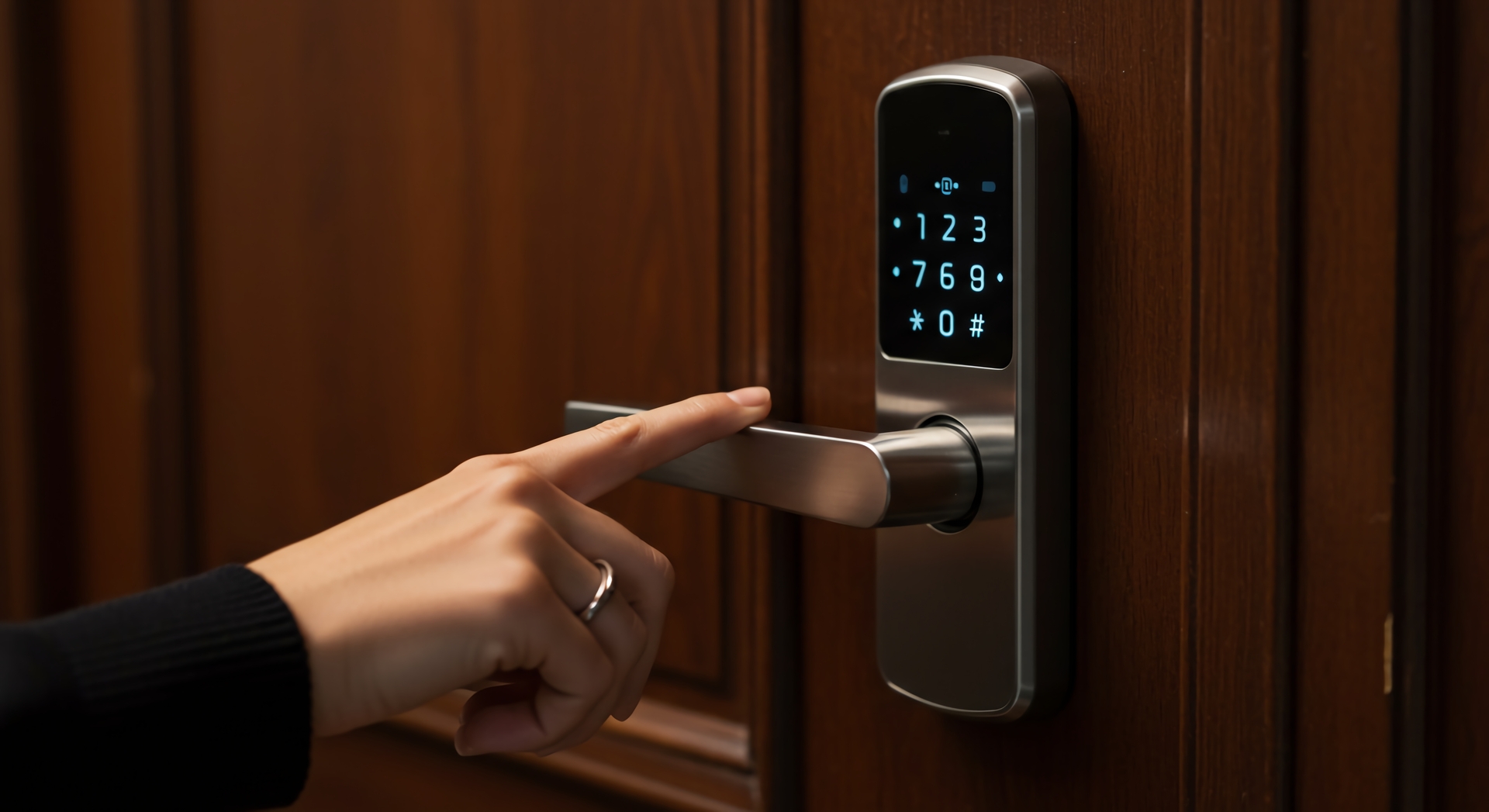
Home security has changed — not because people have become obsessed with technology, but because the way we live has changed. Homes are busier, access is shared more often, and people expect to manage things remotely. Electronic door locks are the practical response to that shift.
Instead of keys that get lost, copied, or handed out too freely, an electronic door lock gives you control. You decide who can enter and when, you can change those permissions instantly, and the lock keeps working reliably whether you are home or not.
This guide explains what electronic door locks are, how they actually improve security, the main types available, and what to think about before choosing one. It is written for anyone who is curious about making the switch — not just the technically inclined.
- What makes a lock “electronic” and how that changes what it can do
- The practical reasons Australian homeowners are moving away from keys
- The main access types and which suits different households
- What actually improves when you install an electronic lock
- What to measure and confirm before buying anything
This guide was reviewed and updated in May 2026.

What Is an Electronic Door Lock?
An electronic door lock replaces the traditional metal key with digital authentication. Instead of turning a key in a cylinder, you might enter a PIN code, touch a fingerprint reader, present an RFID card, or simply have your phone nearby. The bolt retracts and the door opens.
The lock body itself is still mechanical — the latch, bolt, and mortice all work on the same physical principles as before. What changes is how access is granted. That shift removes many of the weak points that physical keys have always carried:
- A key can be lost — a digital credential cannot be misplaced in the same way
- A key can be copied without your knowledge — a PIN or RFID credential is controlled by you
- A key cannot expire — a digital credential can have a time limit built in
- A key cannot tell you when it was used — most electronic locks can
The practical result is not just a different way of unlocking a door. It is a fundamentally different relationship between a homeowner and their home’s security. For a deeper foundation, see Chapter 01 — What Is a Smart Lock?
Why More Australian Homes Are Going Electronic
Most homeowners don’t replace their locks unless there is a clear reason. The reasons we hear most often are not about technology — they are about daily life.
Not carrying keys sounds trivial until you stop doing it. No lockouts, no spare keys under mats, no wondering who still has a copy from the last tenant, cleaner, or tradie. A PIN or fingerprint is often enough to justify the change on its own.
Electronic locks let you add or remove credentials in seconds. A cleaner’s code can expire the moment they finish. A tradie can have access for three days, automatically. No rekeying, no key return, no awkward conversations.
Many systems record entry events or send alerts. You know when the door was locked, who unlocked it, and whether it closed properly. For many homeowners, that visibility provides more reassurance than a heavier deadbolt ever did.
When multiple people need access on different schedules — family members, holiday guests, regular contractors — electronic locks handle this naturally. Each user has their own credential, independently managed. See: Airbnb Smart Locks in Australia.

How Electronic Locks Actually Improve Security
The security improvement from an electronic lock is not primarily about the hardware being harder to break — most quality electronic locks use the same Grade 1 commercial mortice lock bodies that professional installers have relied on for years. The improvement comes from reducing human error and improving access control.
- Auto-locking prevents the most common residential security failure: a door left unlocked by mistake. Set it and forget it — the lock closes itself after a configurable delay.
- No unauthorised key copying — you cannot secretly duplicate a PIN code or RFID credential the way you can walk into a hardware store with a key blank.
- Instant credential revocation — when circumstances change (end of a tenancy, a contractor finishing, a houseguest leaving), access is removed in seconds without any hardware change.
- Activity records provide accountability that physical keys never could. If something happens, you can check the log.
- Encrypted credentials on reputable platforms are not susceptible to simple replay attacks that affect older RFID systems.

Common Types of Electronic Door Lock
Electronic locks are not one-size-fits-all. The right type depends on the door, the environment, and how the property is actually used. For the full breakdown of every access method, see Chapter 03 — Smart Lock Access Methods.
 PIN / Keypad Locks
Enter a code to unlock. Simple, reliable, works without a phone. Multiple codes for different people, changeable in seconds. A strong starting point for most residential front doors.
 Fingerprint / Biometric Locks
Touch the reader and the door opens. Fast, hands-free, nothing to remember. Suited to frequently accessed doors — front doors, home offices, internal entries. Multiple fingerprints can be enrolled for shared household use.
 Bluetooth / App Locks
Unlock from your phone when nearby via Bluetooth — no internet needed for this function. Share digital access with family, guests, or contractors. App logs access history and sends low-battery alerts.
 Remote Access / Connected Locks
A WiFi gateway or bridge links the lock to your home network, enabling remote unlock, real-time notifications, and access management from anywhere. Products like the Zanda Stealth Gateway and the full gateway range add this capability to compatible smart locks. See: Why Smart Locks Drop Off Wi-Fi.


Choosing the Right Electronic Lock for Your Home
The best lock is the one that fits how your home is actually used — not the one with the most features, or the one that costs the most.
1. Start with the door
External doors require weather resistance. Internal doors and home offices may need only basic access control. Security screen doors have different requirements again. Not all electronic locks fit all door types, and the wrong lock on the wrong door is at best frustrating and at worst a compliance issue. See Chapter 04 — Smart Lock Door Types.
2. Think about who needs access
A retired couple with no tradespeople or guests coming and going has different needs from an Airbnb host managing a portfolio of properties. The right access method is the one that suits the actual users — not just the homeowner.
- Consistent household → PIN codes or fingerprint
- Multiple adults with phones → Bluetooth + PIN backup
- Rental guests or contractors → time-limited PIN codes or app-issued access
- Older adults or children → PIN codes (simple, reliable, no phone required)
3. Decide whether you want remote access
Remote access (checking, locking, or unlocking from anywhere) requires a WiFi gateway in addition to the lock itself. If you just want keyless entry at home, Bluetooth and PIN is sufficient and simpler. If you want to manage a rental property from another city, a connected setup makes sense.
4. Consider quality and platform longevity
A smart lock is a system, not just a product — hardware, firmware, mobile app, and parts availability all matter. A lock whose manufacturer stops supporting its platform in three years is a security risk even if the hardware is excellent. Choose established platforms with demonstrated long-term support. See How Long Do Digital Door Locks Last?

Do This Before You Buy Anything: Measure Your Door
The most common reason electronic locks get returned, or cause installation headaches, is not the electronics — it is that the physical lock body doesn’t fit the existing door preparation.
Three measurements matter most for most residential door locks:
- Backset — the distance from the centre of the bolt hole to the edge of the door. 60mm and 70mm are the most common in Australian homes, but aluminium and narrow-frame doors may differ.
- Door thickness — standard Australian residential doors run 38–45mm. Smart locks have a specified minimum and maximum range, and some doors fall outside it.
- Stile width (for aluminium doors) — the width of the frame section where the lock mounts. Narrow stiles require specific slimline products.

A Better Way to Protect Your Home
Electronic door locks are not about replacing everything you already know. They are about improving the parts of home security that cause the most inconvenience and risk — physical key management, access control, and that nagging uncertainty about whether the door is actually locked.
When chosen carefully and installed on a door that is actually ready for one, an electronic lock provides a noticeably smoother, more controllable experience than a traditional lock with keys.
Related Guides
Access methods explained, whether you need Wi-Fi, door type compatibility, and a practical three-step checklist before buying anything.
Battery life, coastal conditions, power outages, and what actually fails in the real world — the honest companion to this guide.
Build quality, environment, and install quality — what actually determines lifespan for an electronic lock in Australian conditions.
When Wi-Fi matters and when it doesn't for short-stay properties — the practical answer for Airbnb hosts across Australia.
The six measurements that determine whether a smart lock will fit your door — with diagrams. Do this before selecting any product.
Every credential type — PIN, fingerprint, RFID, Bluetooth, Wi-Fi — with capabilities, limitations, and which suits which situation.
Ready to Make the Switch?
Tell us about your door and how you use it — we’ll recommend the right product before you spend a cent.
Ask an ExpertVisit Australia’s leading Smart Lock showroom and workshop:
Gold Coast Smart Locks
9/2 Prosper Crescent
Burleigh Heads, QLD
See working models, try the access methods, and get advice from people who install these locks on real Australian doors every day.