How Long Do Digital Door Locks Last? Lifespan Guide — Australia
Posted by Mat Steele on 4th Mar 2026
How Long Do Digital Door Locks Last?
A practical, honest guide to what actually affects lifespan — build quality, installation, environment, usage, and the technology platform behind the lock.
One of the most common questions we hear — in the showroom and online — is: “What’s the life expectancy of a digital door lock?”
You may have seen online discussions suggesting some fail around the 3–5 year mark. The honest answer is: it depends — just like any mechanical lock. And the factors that matter most are not the ones most buyers focus on.
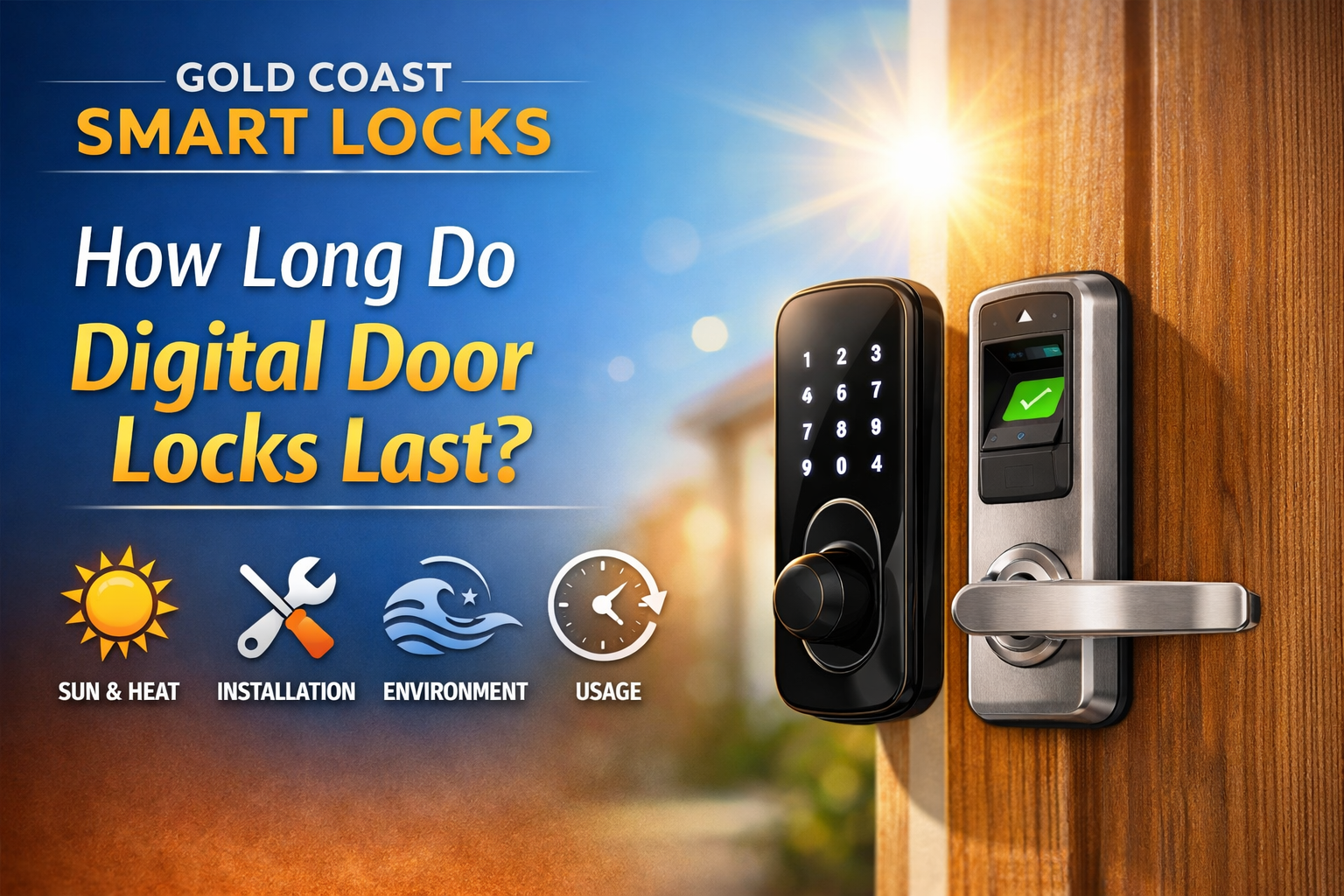
This guide covers:
- How build quality determines the ceiling on lifespan
- Why installation quality is the most underestimated factor
- Environmental stresses specific to Australian conditions — sunlight, coastal salt air, and heat
- How usage frequency and cycle ratings translate into real-world wear
- What happens to your lock if the manufacturer discontinues the platform
- What a realistic lifespan expectation looks like for different scenarios
For a detailed breakdown of the brands available in Australia and their engineering approach, see Chapter 10 — Brand Profiles in the Smart Lock Buyer’s Guide. For the Australian standards that govern mechanical durability testing, see Chapter 11 — Australian Standards Explained.
This guide was reviewed and updated in May 2026.
Build quality: the ceiling on how long any lock can last
Not all locks are built to the same standard. A cheap imported unit built to a price point uses thinner metal, lighter springs, softer gear components and basic surface plating. Under normal residential use, these materials wear faster — particularly if the door isn’t perfectly aligned or the environment is demanding.
By comparison, commercial-grade hardware is engineered for higher cycle counts and tougher conditions. In the right environment, correctly installed and maintained, quality commercial hardware can remain in service for well over a decade.
One useful proxy for build quality is a published mechanical cycle rating — the number of open/close cycles the lock has been tested to withstand. Reputable manufacturers publish these figures. When comparing products, ask for the cycle rating and check whether it has been tested to ANSI/BHMA or an equivalent standard. See Chapter 11 — Australian Standards Explained for what these ratings mean in practice.
Direct sunlight and heat: one of the biggest killers
Direct sunlight is one of the most significant environmental stress factors for external door hardware — mechanical or electronic. In Queensland especially, an unshaded west-facing door can see surface temperatures that would surprise most buyers.
Prolonged UV exposure and heat cycling can:
- Fade or craze touchscreen panels and keypad legends
- Stress and warp plastic housing components
- Accelerate seal and gasket deterioration
- Raise internal operating temperatures beyond design limits
- Reduce battery capacity and shorten charge cycles
If your entry is shaded by a porch, overhang or covered walkway, that significantly reduces heat and UV stress on the lock. If your lock is in full sun every day, build quality and IP rating matter even more — budget units are more likely to show accelerated degradation in this scenario.
When reviewing specifications, look for a published IP (Ingress Protection) rating. IP65 means the unit is dust-tight and protected against direct water jets — a reasonable minimum for an exposed external door. A lock with no published IP rating is making no formal claim about its sealing performance.
Installation quality: the most underestimated lifespan factor
This is the factor most buyers don’t consider when comparing products, and it is arguably the one with the most impact on long-term reliability.
If the door preparation is slightly oversized, misaligned, out of square, or if the strike plate is not aligned precisely:
- The motor works harder on every locking cycle
- The latch drags against the strike plate, increasing friction wear
- Internal gears and drive components accumulate wear faster than the design assumed
- The bolt throw is compromised, potentially affecting security
Professional installation by a qualified locksmith ensures correct alignment, smooth latching, appropriate backset depth and reduced internal strain. For DIY installations that have since developed a slight drag or stiffness in operation, it is worth having a locksmith check the alignment before the motor bears the cost. See our 3 Common DIY Installation Mistakes blog for the specific issues we see most often.
Environment and location: coastal Queensland is not gentle
Where you live matters significantly for hardware lifespan. In coastal areas — which includes much of South East Queensland, including the Gold Coast — the environmental load on external hardware is considerably higher than inland or suburban settings.
Coastal conditions typically add:
- Salt air corrosion — accelerates surface degradation on exposed metal components and can attack internal mechanisms over time
- High ambient humidity — promotes condensation inside unsealed or poorly sealed housings
- Storm-driven rain — tests the waterproofing of any unit without a robust IP rating
- Rapid temperature swings — expand and contract seals and housings, wearing them over time
Some manufacturers explicitly exclude coastal environments from their warranty coverage. Yale, for example, excludes salt-air environments from warranty on most models. Always check the warranty terms before purchasing in a coastal location — and factor in the IP rating and housing material when comparing options.
Even a high-quality lock will age faster in harsh conditions if it is poorly sealed or neglected. Regular cleaning of the keypad, checking that seals are intact, and ensuring the door itself does not allow driving rain to pool at the hardware are all simple maintenance steps that extend service life in coastal settings.
Usage frequency and cycle ratings
A typical residential front door used a handful of times daily is a very different proposition to a high-traffic door. Usage scenarios that put significantly more cycles on a lock include:
- Airbnb and short-stay properties — multiple guest changeovers per week, often with guests who are unfamiliar with the lock
- Office entries and commercial doors used by 20+ staff per day
- Shared accommodation and group homes with constant foot traffic
More cycles means more wear on the motor, gears, latch mechanism, and keypad. Selecting a lock whose published cycle rating matches your actual usage level is a practical way to get a longer service life. A lock rated for 100,000 cycles will reach that limit much sooner under commercial-level traffic than under light residential use.
What happens if the manufacturer discontinues the app or platform?
This is a question that doesn’t come up with mechanical locks, but it is a legitimate consideration with smart locks: the hardware may still be physically functional, but if the supporting app or cloud platform is discontinued, remote management and app-based features stop working.
It is worth understanding what actually stops working if the platform goes away, versus what continues to function independently:
What continues to work without a platform
PIN codes already programmed into the lock, RFID cards and fobs, and physical key override all operate entirely offline and are not dependent on any cloud service or app remaining active. For most residents, these are the daily-use credentials anyway.
What stops working without a platform
Remote credential management via app, time-limited temporary PINs sent remotely, activity logs, and any integration with property management or home automation platforms. These features depend on the cloud back-end remaining operational.
Larger, more established platforms (TTLock powers millions of locks globally; Yale has decades of market presence) have more commercial incentive to maintain long-term support than small or unknown platforms. This is one reason why brand selection and the distribution chain behind the product matter beyond just the hardware itself.
For the long-term support argument specific to the McGrath / LSC / TTLock supply chain, see our blog on Terry’s + LSC + McGrath: Long-Term Confidence.
So what is a realistic lifespan expectation?
There is no honest single number that applies to all smart locks in all conditions. But as a general framework:
For a quality smart lock that is professionally installed, suitable for the door type, and used in a typical residential setting with reasonable environmental protection, a 5–10 year service life is common — and sometimes considerably longer.
Shorter service life is more likely with: budget imports, DIY installation on a misaligned door, full coastal sun exposure without adequate IP rating, high daily cycle counts, or platforms without long-term support commitments.
There is no lock — mechanical or digital — that lasts indefinitely. The goal is to match the product to the door, environment and usage level, install it correctly, and maintain it simply. That combination gives you the best realistic odds of a long, trouble-free service life.
Why buying from a specialist matters for lifespan
When people buy online from unknown suppliers, several lifespan-relevant unknowns come with the purchase:
- The internal build quality and actual cycle rating of the unit
- Whether spare parts or replacement components are available locally
- Whether firmware updates and ongoing app support will continue
- Whether a local warranty claim is actually serviceable
- Whether the product is appropriate for your specific door, environment, and usage level
At Gold Coast Smart Locks, we supply products we are comfortable installing in real Australian conditions, and we back them with a 12-month manufacturer’s warranty through a supply chain with genuine local support. More importantly, we ensure the lock is matched to the door and installed correctly — which, as covered above, is one of the biggest determinants of long-term reliability.
For detail on our supply-plus-install service and what a professional installation involves, see the Site Survey & Installation Services blog.
Related Guides
Honest profiles of every major brand available in Australia, including their engineering approach, acknowledged weaknesses, and best-fit applications.
What ANSI/BHMA cycle ratings, AS4145.2, IP ratings and RCM compliance actually mean when evaluating smart lock durability.
Installation walk-through and troubleshooting reference — the companion guide to getting installation right the first time.
The three installation errors that cause most early smart lock failures — and how to fix them before they become a warranty issue.
Why the supply chain behind your smart lock matters for long-term firmware support, spare parts, and warranty service.
How Terry’s supply-plus-install service works, and why professional installation is one of the best investments in long-term reliability.
Not Sure Which Lock Will Last in Your Conditions?
Before you buy, we can match you to the right lock for your door type, environment, and usage level — and make sure it’s installed correctly.
Ask an ExpertVisit Australia’s leading Smart Lock showroom and workshop:
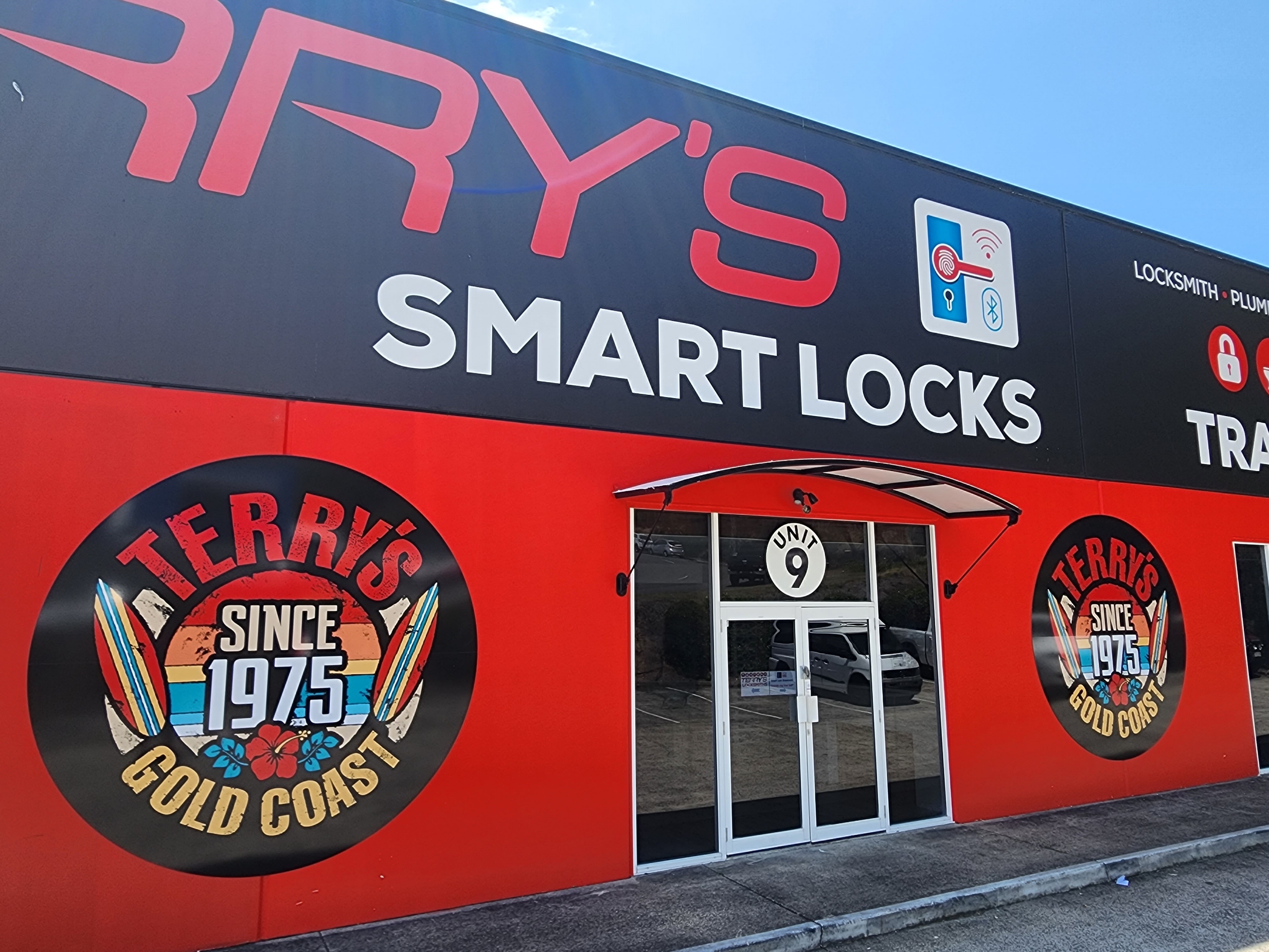
Gold Coast Smart Locks
9/2 Prosper Crescent
Burleigh Heads, QLD
See working models, compare gateways, and get real advice before you commit.
Disclaimer: This article is general information only. Smart lock lifespan varies by brand, environment, usage, installation quality and maintenance. No specific service life outcomes are guaranteed. Manufacturer warranty terms apply to products supplied. Warranty exclusions for coastal environments vary by brand — confirm terms before purchase.