Yale Smart Locks in Australia: An Honest Assessment
Posted by Jim on 25th Sep 2025
Yale Smart Locks in Australia: An Honest Guide
What Yale does well, what users actually complain about, the coastal warranty issue, and when Yale is (and isn’t) the right choice for your home.

Yale is one of the most recognised names in smart locks in Australia. The brand carries genuine heritage — mechanical lock manufacturing going back generations — and a range of smart lock products that suit a wide variety of Australian homes and conditions.
But brand recognition is not the same as the right product for your situation. This guide gives you the honest picture: what Yale smart locks do well, the real-world issues that recurring user feedback has identified, what the coastal warranty exclusion means for Gold Coast properties specifically, and when Yale is a strong choice versus when a different product may serve you better.
It covers:
- The Yale range available in Australia and what distinguishes each product
- What Yale consistently does well across their smart lock lineup
- The recurring real-world concerns — battery life, connectivity, fingerprint reliability — with concrete mitigations for each
- The coastal warranty exclusion and what it means if you live near the water
- When Yale suits your home and when another platform may be a better fit
This guide was reviewed and updated in May 2026. Quality assessment informed by independent analysis of user and professional reviews across retail platforms, review sites, and technical forums.

Why Yale Matters in Australia
Yale’s smart lock range builds on a mechanical foundation that has been developing for well over a century. That heritage matters in practice: the lock bodies are well-engineered, the physical security credentials are solid, and the brand has invested in developing an Australian-specific product lineup rather than just importing international models unchanged.
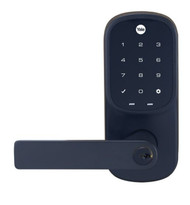
The Australian range includes the Yale Unity Entrance Series — the flagship product for Australian homes — which includes the Unity screen door lock, main entrance lock, and optional Yale Smart Keypad 2 with fingerprint. The Unity Entrance Kit’s DualDoor™ technology allows a single action to unlock both the security screen and the main door simultaneously, which is a genuinely useful feature for the majority of Australian homes with security screens. For more on this, see What Is Dual Unlock?
For a full comparison of Yale and other brands in context, see Chapter 10 — Smart Lock Brand Profiles.

How Yale Smart Locks Work Day-to-Day
Yale smart locks are designed to operate locally at the door first. PIN codes via the keypad, RFID cards and fobs, and Bluetooth unlock via the Yale Home app all work independently of the internet. The WiFi bridge or Connect Plus module adds remote features on top of that foundation, but the lock’s core function is never dependent on connectivity.
With a Yale smart lock correctly installed and configured:
- PIN codes work at the keypad regardless of internet or app status
- RFID cards and fobs (Mifare Classic) work at the door independently
- Bluetooth unlock works when your phone is nearby, without internet
- Remote access — check status, lock/unlock from anywhere — works via the Yale Home app when connected through a WiFi bridge
- Activity history records who used the lock and when (when connected)
For the full gateway picture and how the Connect Plus WiFi Bridge integrates with the Unity range, see Chapter 08 — Smart Lock Gateway Comparison. For the module interchangeability story (Zigbee, Z-Wave), see Yale Door Module Interchangeability.

What Yale Smart Locks Do Well
 Design and form factor
Professional reviews consistently praise Yale’s clean, unobtrusive design. The Unity range sits flush against the door without looking oversized or industrial. Finish options in matte black and satin suit contemporary Australian homes well.
Mechanical hardware qualityThe lock body and mechanical components are well-regarded. Hardware failures are not the primary complaint category for Yale locks — the recurring issues are predominantly software and connectivity rather than the physical product.
Feature breadthThe Unity range covers the main access methods Australians actually want: PIN keypad, RFID, Bluetooth, and optional WiFi with the Connect Plus bridge. DualDoor™ for screen + main door is a meaningful Australian-specific feature missing from most competitors.
Battery backup and mechanical keyYale smart locks include a mechanical key override. A flat battery is not a lockout scenario — the key cylinder remains the ultimate backup. Yale also provides low-battery warnings in advance, though acting on those warnings promptly is important (more on this below).

What to Be Aware Of — The Honest Picture
User feedback across retail platforms, forums, and review sites identifies consistent patterns. These are not reasons to avoid Yale, but they are things to set up for correctly — and to understand before buying.
 Battery Life — The Biggest Recurring Complaint
Battery drain is the single loudest pattern in Yale smart lock user feedback. Most Yale models are designed for 6–12 months per battery set under normal residential use. In practice, some users report batteries lasting only weeks — but this is almost always tied to specific conditions rather than a universal product fault.

App & Connectivity Reliability
Yale Home app reviews are mixed. When app-based remote access works, users appreciate it. When it doesn’t, the complaints tend to be about Bluetooth auto-unlock reliability, bridge/gateway behaviour, and the requirement to be on the same network for some functions. The critical distinction is that local access at the door (PIN, RFID, mechanical key) is unaffected by app or connectivity issues. If the app misbehaves, the door still opens normally at the lock face.
Fingerprint Consistency
The optional Yale Smart Keypad 2 adds fingerprint access to the Unity range. Professional reviews of the fingerprint models have been positive — one major reviewer described it as never failing in their testing. However, broader user feedback is less uniform. Some users describe the fingerprint reader as “too finicky.” This is not unique to Yale — outdoor fingerprint sensors of all brands can be affected by moisture, skin condition, and direct sunlight heating the sensor surface.
Low Battery Warning Behaviour
Some users have reported that low-battery warnings did not give as much advance notice as expected, or that the indicators did not behave as described. Yale does include low-battery alerts (audible beeps, visual indicators, and app notifications where connected), but the advice is clear: when the low-battery warning activates, act on it promptly. Do not dismiss it and assume weeks remain. Yale smart locks include a mechanical key override, so a flat battery is a frustration rather than a lockout — but a dead battery on the way out the door is inconvenient enough to be worth avoiding. For more context, see The Realities of Electronic Door Locks.

Gold Coast & Coastal Installations — Read This First

This does not mean Yale smart locks cannot be used on the Gold Coast. Many are installed here successfully. What it means is:
- Correct model selection matters — some Yale models are better suited to coastal conditions than others
- Door position matters — a lock on a sheltered internal entry will outlast the same lock on a fully exposed oceanfront door
- The warranty exclusion means responsibility for coastal damage rests with the buyer
- Local installation expertise from someone familiar with Gold Coast conditions is worth more than the sticker price difference between models
For the Australian corrosion resistance rating system and what it means when choosing a lock for coastal Queensland conditions, see Chapter 11 — Australian Smart Lock Standards.


Installation Quality Matters More Than Features
Most issues we see with Yale smart locks in the field are not product faults. They are caused by installation or door condition problems that would affect any electronic lock:
- Poor door alignment — the most common cause of apparent lock failure. The door has shifted, and the latch no longer seats cleanly. The lock is working correctly; the door is the problem.
- Incorrect latch positioning — the latch is not engaging the strike cleanly on every closure, causing auto-lock failures.
- DIY installation without calibration — Yale locks require careful alignment during installation. A unit that is slightly off will feel unreliable regardless of product quality.
- Unsuitable door or hardware — not every door or existing hardware configuration is compatible. Checking clearances, backsets, and stile widths first avoids returning the product.
A correctly installed Yale smart lock feels effortless and operates without issue. A poorly installed one will feel unreliable. For specific installation troubleshooting on the Unity Slim, see Troubleshooting & Reset Guide — Yale Unity Slim.
Yale for Rentals, Airbnb & Short-Stay Properties
Yale smart locks are a practical choice for rental properties and Airbnb accommodation where access needs to change regularly. PIN codes can be added or removed without a locksmith. Temporary codes can expire automatically after a guest’s stay. Access history provides accountability.
A few practical notes for short-stay hosts:
- Yale does not have a native Airbnb Connect integration in the way Igloohome does — automation requires a third-party property management system or manual code management
- Remote access via app requires the Connect Plus WiFi bridge to be installed at the property
- Battery monitoring via the app is useful for remote properties — set up notifications before leaving the property unattended
- In strata-managed buildings, Yale’s clean aesthetic typically meets body corporate appearance requirements
For a broader look at smart lock options for Airbnb hosts, see Airbnb Smart Locks: Do You Really Need Wi-Fi?

Is Yale the Right Choice for Your Property?
- You want a clean, mainstream smart lock for a residential front door
- DualDoor™ (screen + main door, single action) is relevant to your home
- You’re comfortable with app-based management and accept some app variability
- Your door is in a sheltered or semi-exposed position (not fully coastal-exposed)
- You want a brand with local supply, local support, and physical hardware quality
- You are prepared to manage battery replacement actively — not waiting for a warning
- The property is in a fully exposed coastal position — the warranty exclusion is a real commercial risk
- You are an Airbnb host who wants native Airbnb Connect integration (Igloohome is the stronger fit)
- You need offline PIN generation for remote properties where creating codes without internet access is essential
- Battery drain from a WiFi-heavy setup is a concern and router placement cannot be improved
- You need a commercial-grade access control system rather than a residential-grade smart lock
Related Guides
Step-by-step factory reset, troubleshooting, and configuration reference for the Yale Unity Slim smart lock.
Which Zigbee, Z-Wave, and network modules can be swapped between Yale lock models — and what that means for system integration.
Yale’s DualDoor™ technology explained — single-action unlock for both the security screen and main door, and why it matters for most Australian homes.
Band steering, 2.4GHz constraints, and why your router environment matters for battery life and connected lock reliability — directly relevant to Yale WiFi setups.
How Yale compares to Igloohome for short-stay rental properties — when WiFi connectivity matters and when an offline-first approach is more practical.
Yale in context alongside other leading Australian smart lock brands — how it compares on features, target market, and typical use cases.
Not Sure Which Yale Model Suits Your Door?
We install Yale smart locks on Gold Coast homes every week. Tell us about your door and we’ll confirm the right model and configuration — including coastal suitability — before anything is ordered.
Ask an ExpertVisit Australia’s leading Smart Lock showroom and workshop:
Gold Coast Smart Locks
9/2 Prosper Crescent
Burleigh Heads, QLD
See the Yale Unity range working, compare with other brands side by side, and get honest advice before you commit.