F05 vs F54 ANSI Mortice Locks – What’s the Difference and Which One Do You Need?
Posted by Jim Noort on 31st Jan 2026
F05 vs F54 ANSI Mortice Locks — What’s the Difference?
One has a deadbolt. One doesn’t. Here’s why that matters for smart locks, fire doors, and commercial applications.
Short Answer
The difference between the McGrath F05 and F54 ANSI mortice locks is straightforward:
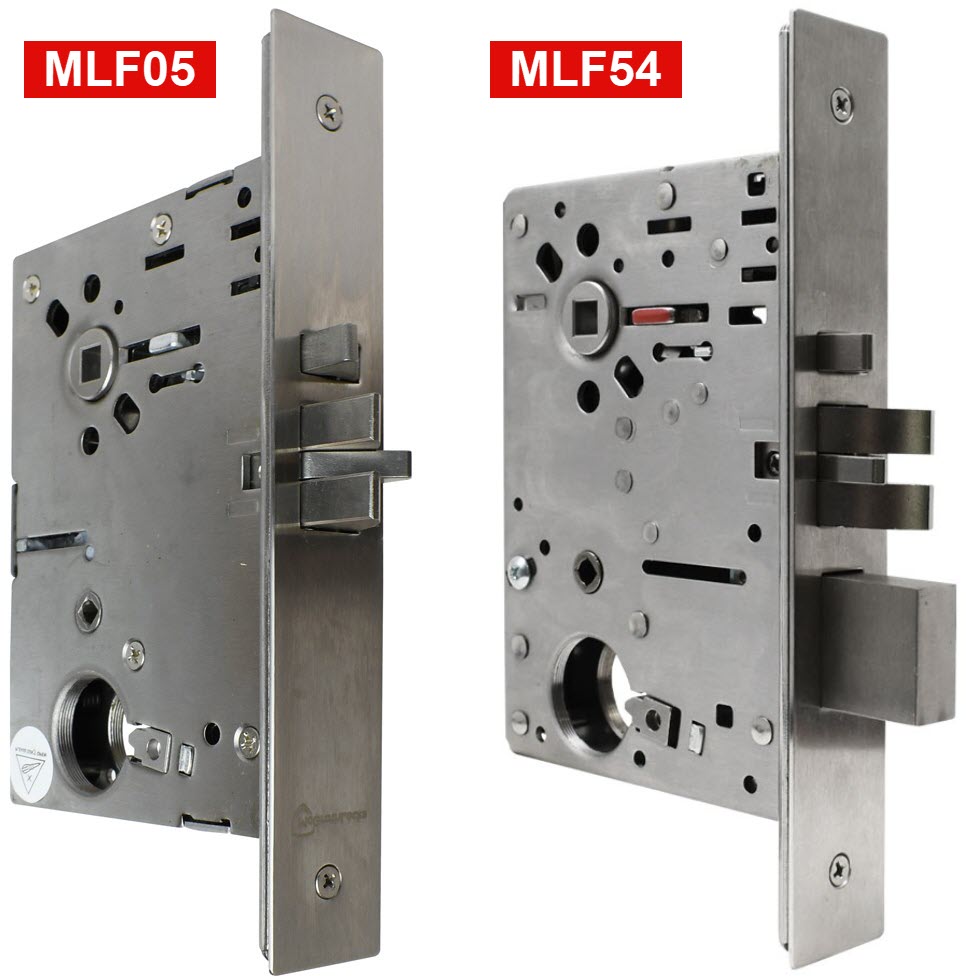
- F05 is a latch-only mortice lock with no deadbolt.
- F54 includes a 1-inch throw mechanical deadbolt in addition to the latch.
If you are installing a smart lock or fitting hardware to a fire-rated door, the F05 is usually the safer and simpler choice. The F54 should only be used where a mechanical deadbolt is specifically required and the compliance implications are understood.
For context on why mortice lock selection matters on fire doors specifically, see Chapter 05 — Fire Door Smart Locks in the Smart Lock Buyer’s Guide.
This guide was reviewed and updated in May 2026.

Shop Both Products


What the F05 and F54 Have in Common
Both are Grade 1 commercial mortice locks built to the same durability standard. The difference is not build quality — it is function.
| Specification | F05 & F54 (both) |
|---|---|
| Lock format | ANSI mortice |
| Certification | BHMA Grade 1 |
| Material | Stainless steel SS304 |
| Backset | 70 mm |
| Pitch | 92 mm |
| Latch | 19 mm anti-friction spring latch |
| Spindle | 8 mm |
| Face plate | 203 mm H × 32 mm W |
| Lock case | 147 mm H × 99.5 mm W × 22 mm D |
| Cylinder | Threaded Kawneer mortice cylinder (sold separately) |
| Handing | Field changeable |
| Min. door thickness | 45 mm |
| Durability | 1,000,000 cycle tested |

The Key Difference: Deadbolt vs No Deadbolt
The anti-friction latch is the spring-loaded bolt that retracts automatically when the handle is pressed and re-engages when the door closes. This is the primary function both locks share — and the only locking function the F05 has.
The deadbolt is a separate, independently operated bolt that must be deliberately extended and retracted using a key or turn. It projects 25mm (1 inch) beyond the face of the lock and engages a separate strike in the door frame.
 F05 — Latch Only
- 19mm anti-friction spring latch
- No deadbolt
- Locking controlled entirely by the handle, smart lock, or access control system
- Predictable behaviour — no secondary mechanical function to manage
- Simpler compliance on fire-rated doors
 F54 — Latch + Deadbolt
- 19mm anti-friction spring latch
- 1-inch throw mechanical deadbolt
- Deadbolt operated by key or turn function independently of the smart lock
- Designed for the McGrath Bardon platform specifically
- On fire doors: deadbolt function must be disabled


Smart Lock Compatibility in Practice
Both the F05 and F54 are used with smart locks that require an ANSI mortice format, including the McGrath Bardon platform. The difference is how much mechanical control exists outside the smart lock system.
When paired with the F05, the smart lock controls all locking behaviour. There is no mechanical deadbolt to manage, disable, or monitor. The smart lock is the single point of access control, which is clean and unambiguous.
When paired with the F54, the smart lock controls the latch, but a 1-inch mechanical deadbolt still exists within the mortice body. That deadbolt can potentially be operated manually by anyone with access to the correct cylinder key, independent of the smart lock system. This can create access control gaps depending on who holds keys and how the door is managed.

Fire Door Compliance — Where Most Mistakes Happen
Fire door standards (AS 1905.1 and AS 1530.4) do not permit user-operable deadbolts on fire-rated doors in most configurations. The reason is practical: a protruding deadbolt can prevent a fire door from closing and latching completely under fire conditions, which directly compromises the door’s rated fire integrity.
F05 on fire doorsNo deadbolt means no deadbolt-related compliance issues. The F05 naturally avoids the problem and is the straightforward choice for fire-rated smart lock installations.
F54 on fire doorsThe F54 can only be used on fire doors when the deadbolt function is permanently disabled and the installation matches an assessed fire door configuration. This requires additional care during specification and must be confirmed by a competent person.

Important: Cylinder Is Not Included with Either Lock
Neither the F05 nor the F54 is supplied with a cylinder. Both locks accept threaded Kawneer mortice cylinders, which must be ordered separately.

Which One Should You Choose?
Choose the F05 if:- You are installing a smart lock
- The door is fire-rated
- Locking is controlled electronically
- You want the simplest compliance outcome
- The door is in a commercial or access-controlled environment
- You want the smart lock to be the sole point of access control
Choose the F54 if:- A mechanical deadbolt is specifically required by the design brief
- The door is not fire-rated, or the deadbolt will be permanently disabled
- Manual key locking is part of the security design alongside the smart lock
- You have confirmed the deadbolt does not conflict with any compliance requirements

Related Guides
Latch-only, BHMA Grade 1, SS304, 70mm backset. The preferred choice for smart lock and fire door installations.
Latch + 1-inch throw deadbolt, BHMA Grade 1, SS304, 70mm backset. For applications where a mechanical deadbolt is specifically required.
AS1905.1, NCC Clause D2.21, E-Core/Firecore/Pyropanel, and which hardware configurations are certified for fire door use.
Fire door compliance in Queensland apartments — FRL ratings, certified doorsets, and what smart locks can and can't be fitted.
E-Core, Firecore, and Pyropanel explained — and why certification for one core type does not cover another.
Bolt throw defined, why longer throw means better resistance to door kick-in, and Australian conventions for residential vs commercial.
Not Sure Which Mortice Lock Your Install Needs?
Send us your door details — fire-rated or not, smart lock model, and existing hardware — and we’ll confirm the right mortice lock and cylinder before you order.
Ask an ExpertVisit Australia’s leading Smart Lock showroom and workshop:
Gold Coast Smart Locks
9/2 Prosper Crescent
Burleigh Heads, QLD
See working commercial mortice lock configurations and get specification advice before you commit.