



ABUS Key Garage One KG787LEDC - Wall Mounted, Dial Combination with LED
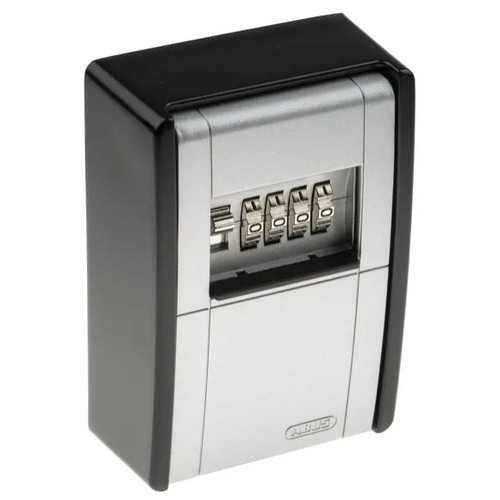
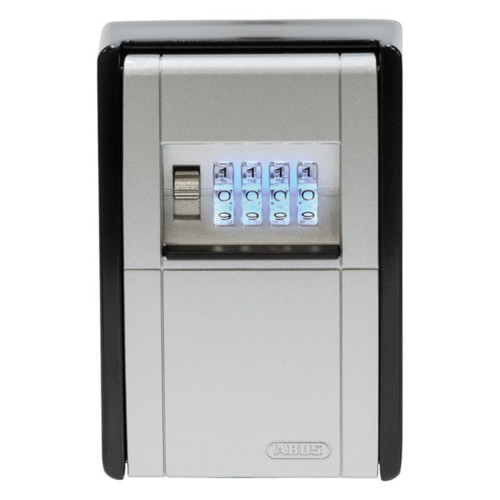
The ABUS Key Garage KG787LEDC is a wall-mounted key safe opened by a four-dial mechanical combination, with one difference from every other box in the range: the number dials are lit. Slide the weather cover down and the dials light up for 30 seconds - long enough to read the numbers, dial the code and get the key out without holding a phone torch between your teeth.
That is the whole reason this model exists alongside the plain ABUS Key Garage KG787C. Same body, same capacity, same mounting, same four-dial mechanism - the KG787LEDC just adds light. If the box is going somewhere that is genuinely dark when it gets used, that is worth paying for. A cleaner arriving before sunrise, a carer doing an evening round, a holiday guest landing at eleven at night in a driveway with no sensor light - all of them are reading four small numbers in the dark, and all of them will get it wrong a few times without help.
The coin cell lights the dials. It does not lock or unlock anything. The combination, the latch and the drawer are entirely mechanical. If the CR2032 goes flat, the KG787LEDC opens exactly as it always did - you just need your own light. There is no app, no pairing, no account and no power dependency anywhere in the locking mechanism, which is a genuine difference from an electronic key safe.
Inside there is room for up to 20 keys or 14 access cards on removable hooks, so it suits a household key set, a small site's key run, or a tenancy handover. It screws to a wall, indoors or in a protected outdoor position, using the fixing kit in the box.
 Key Features
- LED-illuminated number dials, lit for 30 seconds - the feature that separates this model from the non-LED KG787C.
- Fully mechanical locking. The CR2032 coin cell powers the light only - the dials, latch and drawer work with no power at all.
- Four-wheel combination with a resettable code, changed on the unit with no tools and no need to take it off the wall.
- Holds up to 20 keys or 14 access cards on removable key hooks.
- Retractable plastic cover shields the dials from weather when the box is not in use.
- Steel alloy housing with a zinc alloy access door, and a wall fixing kit supplied.
- No app, no account, no internet and nothing to enrol - share the code by phone, text or email and anyone can use it.
- Part of the wider key storage range, which runs from mini padlock boxes up to 50-key wall cabinets.

A single CR2032 coin cell drives the illumination, and ABUS rates it at about two years in normal use. When it dies, nothing about access changes: the four dials still turn, the code still releases the latch, and the drawer still opens. That is a real distinction from an electronic key safe, where a flat cell can leave you locked out of your own keys. Replacement CR2032 cells are supermarket stock and the cell is user-replaceable. For background on how power is handled across lock types, see Power and Battery in Chapter 13 of the Buyer's Guide.
 What's in the Box
- 1 x ABUS Key Garage KG787LEDC wall-mounted key safe, with removable key hooks
- Wall fixing kit
- ABUS KeyGarage 787 + 797 installation and operating instructions
 Suitable Uses
- Anywhere the box gets used after dark. Car ports, side passages, undercroft parking, stairwells, shaded entries and back doors with no sensor light. This is the case the LED was built for, and it is the only reason to choose the KG787LEDC over the KG787C.
- Cleaners, carers and support workers on early or late rounds. A carer arriving at 6am in winter or finishing a round at 9pm is dialling four numbers by feel on an unlit box. Lit dials remove the fumbling, and they remove the phone calls that follow it.
- Holiday lets and short-stay handover. Guests arrive late, often in the dark, often at an address they have never seen. Change the code between stays and the previous guest's code is dead. See how a combination key safe actually works for the mechanics, and the uses beyond the beach for how tradies, carers and hosts actually use these boxes.
- Tradespeople needing access to a site or a unit. One code, shared by phone, changed when the job finishes. No credential to issue and nothing to collect back.
- Households keeping a spare set outside. A key safe screwed to a wall is a serious step up from a magnetic hider or a key under a pot. The comparison between key hiders and a real key safe is worth two minutes before you decide.
- Indoors, or outdoors in a protected position. ABUS rates the 787 range for protected outdoor areas - under an eave, inside a car port, in a recessed entry. It carries no ingress or weather rating, so do not mount it where it takes driving rain head-on. Browse the full key storage category if a weather-shuttered box suits the position better.

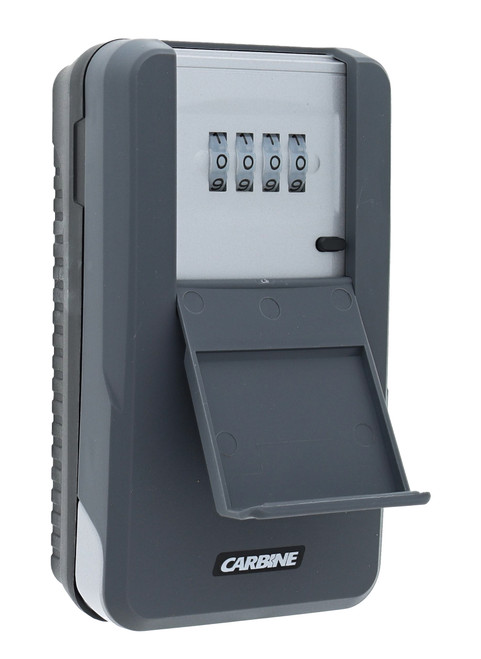
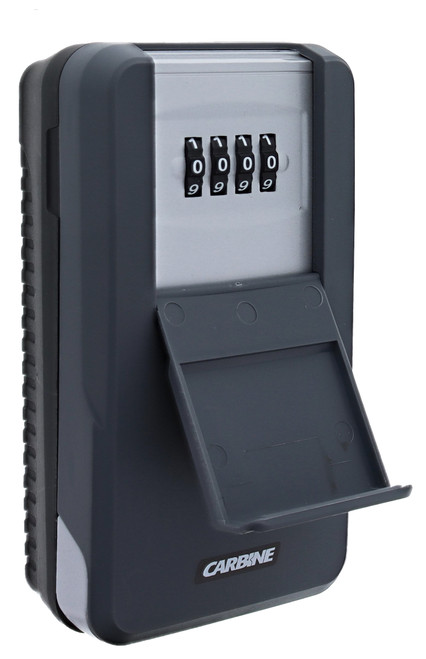
If the KG787LEDC does not suit the position, the Carbine Wall Mounted Key Safe - Dial Combination with LED (Large) is the other wall-mounted lit dial box in the range, and the Carbine Shackle Mounted Key Safe - Dial Combination with LED (Large) is the lit option if you need to hang the box off a railing rather than screw it to a wall. Within ABUS itself, the Key Garage KG797LEDC is the same lit dial mechanism in a shackle-mounted body. For a dial wall box with a weather shutter over the mechanism, look at the Burg-Wachter Key Safe 30.
 Available Finish Options
 Black with Silver Front
Body
(This Product)
KG787LEDC Black with Silver Front
Front panel
(This Product)
KG787LEDC
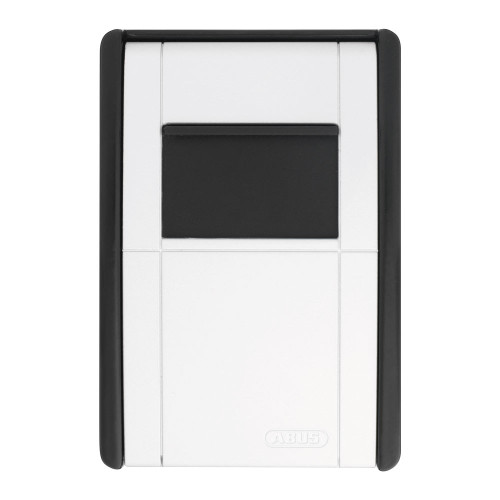
The KG787LEDC is supplied in one finish only - a black body with a silver front. The two swatches above show the two colours of that single finish, not two options to choose between. Finish selection does not affect functionality, compliance, or performance.
 ABUS Key Garage - Item Code Family
This product (bold row) is the wall-mounted, LED-illuminated dial model. Two models in this family carry lit dials - the KG787LEDC and the shackle-mounted KG797LEDC. Only the KG787BTC has Bluetooth, individual user codes and an access log; every other model in the table is mechanical, and access depends on knowing the current code.
 Full Specifications
ABUS states no security grade, insurance approval, attack-resistance class or ingress rating for any Key Garage box, and neither do we. Treat it as a deterrent and a convenience, not as a safe.
 Setting and Changing the Combination
The KG787LEDC leaves the factory set to 0000. Changing that code is the first thing you do, before the box goes on the wall and before a key goes anywhere near it. The change is done on the unit itself - no tools, no dismantling, and no need to take the box down once it is mounted.

ABUS warns about this in bold on the instruction leaflet, and it is not a formality: if the code is lost, it cannot be recovered and the KeyGarage cannot be opened. There is no override key, no master code and no reset from the outside. The code change can only be made with the drawer already open, so a forgotten code on a closed box is the end of the story for that unit. Record it the moment you set it.
To open the box: push the protective cover down, set your code on the four dials, press the open button and the drawer drops. Take out what you need, close the drawer without disturbing the dials, then spin the dials off your code and push the cover back up. Reclosing first and scrambling second is the right order - it is the habit that stops the next person reading your code off the box.
To change the code: open the key drawer, find the reset button behind it, press it to the left and push it down. Set the new code on the dials, then push the reset button back to its original position. That is the whole procedure, and it takes under a minute. The full illustrated sequence is in the KeyGarage 787 and 797 instruction leaflet.
 Wall Mounting
The 787 body is surface fixed. Hold the box where you want it, mark the drill holes through the back, drill and plug the wall, then screw the KeyGarage to the wall through those plugs and close the drawer. The fixing points sit behind the drawer, so once the box is closed and the code is scrambled the screws are not accessible - which is the point of fixing it this way round.

Mount it into something solid - brick, block, or render over masonry with the right plug. A key safe screwed into a single sheet of fibre cement is a key safe that comes off the wall. Put it out of sight of the street and the front approach if you can, and at a height that suits whoever actually uses it. Since the dials light themselves, you are free to choose a darker, less conspicuous spot than you would with an unlit box. If the wall is awkward or you would rather not drill it yourself, our supply and installation service covers this, and the advice and installation page explains how it works.
 Frequently Asked Questions
No. The CR2032 runs the dial illumination and nothing else - the combination, the latch and the drawer are purely mechanical and need no power at all. A flat cell means dark dials, not a dead lock. Swap the coin cell and the light comes back. This is the main practical advantage a mechanical key safe holds over an electronic one, and it is worth reading why the backup key gets stored outside the house in the first place.
It arrives set to 0000, and yes - change it before you use it. ABUS is blunt about the reason in the instructions: a lost code cannot be recovered and the box cannot be opened. Set your own code on the unit with the drawer open, using the reset button behind the drawer, and write the new code down somewhere that is not the box itself.
Light, and only light. Same 20-key capacity, same four-dial mechanism, same wall mounting, same steel alloy body. The KG787LEDC adds LED-illuminated dials that stay lit for 30 seconds and a CR2032 to run them. If the box will be used in daylight, the KG787C does the same job for less. If it will be used at night, by someone who is not you, the LED earns its keep on the first call you do not get.

In a protected outdoor position, yes - under an eave, inside a car port, in a recessed doorway. The retractable plastic cover keeps weather off the dials between uses. What it does not have is an ingress or weather rating of any kind, so a wall that takes driving rain or full afternoon sun is the wrong wall. On the Gold Coast, salt air is the other thing to think about: a sheltered position and an occasional wipe-down will add years to any key safe.
Twenty plain house and unit keys on removable hooks, yes - that is the figure ABUS quotes, and it is subject to key type. Bunches on rings, car keys with plastic heads, transponder fobs and remotes all eat the space fast, so a realistic working number for a mixed set is well under twenty. If you are storing a genuine key run rather than a spare set, the KG787BIG takes 50 keys or 30 cards in a deeper body. Either way, browse the full key storage range before you decide on capacity.
Additional Information


 Warranty
ABUS products are backed by a manufacturer's warranty covering defects in materials and workmanship. Warranty periods vary by product - contact us or refer to your product packaging for the period that applies to your model. All warranties are supported under the Australian Consumer Law. Proof of purchase required for all claims. Returns & Warranty | ABUS warranty & returns information
 Download PDF Resources
The fold-out leaflet with the illustrated operating sequence: opening the key drawer, the 0000 factory setting, setting and changing the four-dial code on the unit, scrambling the dials, and wall mounting the 787 body.
The full key storage range with a model-by-model comparison matrix; the 787 LED specification table - dimensions, capacities, materials, weight and the CR2032 - is on page 6.
Eight-page range brochure organised by mechanism - push-button boxes first, then the dial-type wall and padlock models, closing with the automotive window adaptor. Range context only: it predates the LED variants.
ABUS Key Garage KG787LEDC - FAQ, Setup and Owner's Guide
Everything below comes from the ABUS KeyGarage 787 and 797 instructions, the ABUS key storage catalogue, and what we see come back across the counter. If your question is about power, batteries or lock reliability more generally, Chapter 13 of the Buyer's Guide covers the practical side across every lock type we sell.
The LED and Its Battery
Thirty seconds. That is enough to read the numbers, set four dials and press the open button without rushing, and short enough that the cell is not being drained every time someone brushes past the box.
A single CR2032 lithium coin cell - the same cell that lives in car remotes and bathroom scales, sold in every supermarket and hardware store. ABUS rates it at roughly two years in normal use. Heavy daily use will shorten that; a box that gets opened twice a month will run longer.
The dials stop lighting. Nothing else changes. The code, the latch and the drawer have no electrical involvement whatsoever, so the box opens exactly as it did the day before - you just need a torch until you swap the cell. There is no low-battery lockout, no reset, and no code loss. Compare that with what actually happens when an electronic lock's battery dies.
It depends entirely on when the box gets opened and by whom. If you are the only user and you open it in daylight, no - buy the KG787C and keep the difference. If a cleaner, carer, tradesperson or guest is dialling four small numbers on an unlit wall at night, yes. The cost of the LED is roughly the cost of one after-hours call-out that did not need to happen.
Using the Key Garage
Push the protective cover down, dial your code on the four wheels, press the open button, and the key drawer drops. Take the key. To close: shut the drawer first, then spin the dials off your code, then push the cover back up. Doing it in that order matters - if you scramble before closing, you are fighting the mechanism; if you close and walk away without scrambling, the next person to wander past reads your code straight off the box.
Up to 20 keys or 14 access cards, subject to key type. Those are flat keys on the removable hooks. A single car key with a moulded plastic head can take the room of three or four house keys, and a bunch on a ring is worse again. If you need genuine capacity for a key run, the KG787BIG is the deeper body at 50 keys or 30 cards.
Yes - the hooks are removable. Take them out if you are storing access cards, fobs or an odd-shaped remote rather than a row of keys, and the full internal space is available.
One that opens one thing. Not a master key, not a key with the address on the tag, and ideally not the car key if the car is in the driveway. Take the address tag off before it goes in, and if the key is for a gate or a garage rather than the front door, better again. If the set you need to store is bigger than one key, look at capacity across the key storage range before you settle on a box.
Setting and Changing the Code
0000, from the factory. Change it during setup, before the first key goes in. Leaving the factory code on a mounted box is the single most common mistake we see with key safes of every brand.
No tools, and the box can stay on the wall. Open the key drawer so the reset button behind it is accessible, press that button to the left and push it down, set the code you want on the four dials, then push the reset button back to where it started. That is it. Because the reset button sits behind the open drawer, the code can only ever be changed by someone who already knows the current one.
Honestly - very few. ABUS states plainly that a lost code cannot be recovered and the KeyGarage cannot be opened. There is no override key, no master code and no factory reset available from the outside, and the reset button is inside the closed drawer. A locksmith may be able to destroy the box to recover what is inside it, but the box itself will not survive. This is exactly why the code goes in a notebook or a password manager the moment you set it. If you need a spare code to hand out, use a second box rather than relying on memory.
Whenever the list of people who know it changes. End of a tenancy, end of a job, change of cleaner, end of a guest stay. A mechanical combination is a single shared credential - you cannot remove one person from it, only everybody at once. That is the trade for having no batteries, no app and no account.
Yes, and that is the practical appeal of a combination box - four digits travel by phone call, text or email, with nothing to enrol and nothing to collect back afterwards. Just remember that a code sent is a code you no longer control, so change it when that person no longer needs access.
Mounting, Weather and Position
Surface mounted, through the back of the box. Hold it in position, mark the holes, drill and plug the wall, screw it up through the plugs and close the drawer. The fixings sit behind the key drawer, so they are only reachable by someone who already has the code open in front of them.
Something solid - brick, block, or masonry behind render, with a plug rated for it. Timber studwork is acceptable if you hit the stud. What does not work is a single sheet of fibre cement or plasterboard with nothing behind it: the box will come off the wall with far less effort than picking the code. If the wall is difficult, our free site survey will sort it out before you buy.
No, and we will not pretend otherwise. ABUS rates the 787 range for indoor use or protected outdoor areas, and states no IP rating, weather rating or ingress figure for it anywhere. The retractable plastic cover keeps rain and dust off the dial mechanism between uses, which is a sensible piece of design, but it is not a seal. Mount it where it is sheltered.

Any metal box near the Gold Coast surf lives a harder life than the same box inland, and ABUS makes no salt-air or corrosion claim for the KeyGarage range. Choose the most sheltered position you have, keep the cover down between uses, and give the dials an occasional wipe and a light spray of dry lubricant. The coastal maintenance section of our key storage guide has the routine.

87 mm wide, 120 mm high, 44 mm deep, and 743 g. It is a hand-sized box - roughly the footprint of a paperback - so it does not dominate a wall, and the depth is shallow enough to sit comfortably in a recessed entry or beside a meter box.
Choosing Between the Models
Light. That is the whole difference. Identical capacity, identical mechanism, identical mounting, identical body. Choose the KG787C for a well-lit position and this model for anywhere else.
The KG797LEDC is the same lit dial mechanism in a portable body with a 10 mm shackle, so it hangs off a railing, a gate, a fence or a door handle with nothing drilled. The KG797C is the unlit version of the same thing, and the Carbine Shackle Mounted Key Safe with LED is the alternative brand in that format. Renters and strata properties are the usual reason.
Dials give a four-digit code on four wheels, which most people find easier to share and easier to get right by feel. Push-button boxes such as the KG767C and the portable KG777C use ten buttons and a code of no fixed length, which suits buyers who want a longer code. Neither is more secure than the other in practice - the difference is how it feels in the hand. The KG747LC is the other wall-mounted push-button option.
When you need to know who opened it, or you need a code that expires on its own. The KG787BTC Smart Bluetooth adds individual user codes, a calendar function and an audit trail through the ABUS app. For a single spare house key that three people share, it is more system than the job needs, and the mechanical box has the better failure mode.

Possibly, and it is a fair question. If the real problem is that people keep needing to get in when you are not there, a battery-free keypad lock on the door removes the key from the equation entirely - browse the digital mechanical locks range for that approach. It is a different class of product at a different price and a different install, but for a busy household or a short-stay property it is often the better answer than any key safe.
Related Products, Guides and Chapters
The ABUS Key Garage range: KG787C (the non-LED original) · KG787BIG · KG787BTC Smart Bluetooth · KG767C · KG747LC · KG797LEDC · KG797C · KG777C · KG737C Mini · the whole range on the ABUS brand page.
Comparable key safes from other brands: Carbine Wall Mounted Key Safe - Dial Combination with LED (Large) · Carbine Wall Mounted Key Safe - Dial Combination (Large) · Carbine Wall Mounted Key Safe - Dial Combination (Small) · Burg-Wachter Key Safe 30 · Burg-Wachter Key Safe 10 · Kidde KeySafe Pro S7 with Weather Cover · Wolflok Maximum Security Mechanical Key Safe.
Categories: Key Storage · Digital Mechanical Locks.
Guides and chapters: Why the traditional hiding places do not work · What a mechanical key override is · Chapter 13 - Security · Chapter 10 - Smart Lock Brand Profiles.
Talk to us: Advice and installation · Qualified locksmith recommendation.
What's in the Box - ABUS Key Garage One KG787LEDC
- 1 x ABUS Key Garage KG787LEDC wall-mounted key safe, LED-illuminated dials
- Removable key hooks, fitted
- Wall fixing kit
- ABUS KeyGarage 787 + 797 installation and operating instructions
The dial illumination runs on a single CR2032 lithium coin cell, rated at about two years and replaceable by the owner. The cell powers the light only - the four-dial combination, the latch and the drawer are entirely mechanical and work with no power at all.
The KG787LEDC ships on the factory code 0000. Change it during setup, with the drawer open, using the reset button behind the drawer - and write the new code down. A lost code cannot be recovered and the box cannot be opened without it.
ABUS Key Garage - Product Brochure
This brochure covers the Key Garage line by mechanism - push-button models first, then the dial-type models. It is an earlier print run and does not show the LED-illuminated variants, so the KG787LEDC does not appear in it by name. For this model's own figures, use the ABUS key storage catalogue (page 6) or the Full Specifications table on this page.


PDF Files - ABUS Key Garage One KG787LEDC
Multilingual fold-out leaflet with the line-art operating sequence: opening the key drawer, the 0000 factory setting and the warning that a lost code cannot be recovered, changing the four-dial code on the reset button, scrambling the dials, and wall mounting the 787 body.
The full ABUS key storage range with a side-by-side comparison matrix covering dials, capacities and mounting types. Page 6 carries the KeyGarage 787 and 787 LED specification tables - the source for this page's dimensions, capacities, materials, weight and CR2032 figures.
Eight-page range brochure arranged by locking mechanism, from the large-capacity push-button boxes through the dial-type wall and padlock models to the automotive window adaptor. Range context only - it predates the LED-illuminated variants and does not specify the KG787LEDC.
ABUS Warranty
ABUS products sold by Terry's Tradies Pty Ltd and its associated websites, trading names, and subsidiaries are backed by a manufacturer's warranty covering defects in materials and workmanship, together with your rights under the Australian Consumer Law (ACL). Warranty periods vary by product line - refer to your product packaging or contact us at the time of purchase for the period that applies to your specific model.
Warranty Summary
How to Make a Warranty Claim
- Contact Terry's Tradies Pty Ltd at your original place of purchase first - all warranty claims must be directed to the retailer where the product was purchased.
Phone: 07 5601 1867
Visit: U9/2 Prosper Crescent, Burleigh Heads QLD 4220 - Have your proof of purchase ready (receipt or order confirmation).
- If the fault is not immediately visible in person, provide clear photos showing the defect so the item can be assessed before a Return Merchandise Authorisation (RMA) is approved.
- Do not return the item before receiving RMA approval - items returned without approval may be sent back to you at your cost.
- Once approved, you will receive return instructions. If the item is confirmed faulty, a prepaid return freight label will be provided to cover return shipping costs.
 What the Warranty Does Not Cover
- Normal wear and tear
- Damage caused by misuse, abuse, or improper installation
- Damage caused by neglect or failure to follow product instructions
- Products not purchased from an authorised retailer
Warranty claims must be lodged with the retailer where the product was originally purchased. ABUS products purchased from another retailer or website cannot be returned to Terry's Tradies Pty Ltd and its associated websites, trading names, and subsidiaries for warranty assessment.

Confused? Overwhelmed? We get it.
Choosing the right smart lock can be genuinely tricky - door types, backsets, app platforms, compatibility with your existing hardware... there is a lot to consider. We have decades of experience fitting locks of all types, including smart locks, and we are happy to help.
Our expert recommendation service is free. Upload a few photos of your door and describe what you need, and one of our qualified locksmiths will give you a personalised recommendation.
Get Your Free Recommendation →How it works - three easy steps:
1. Upload photos
A few clear shots of your door, lock and frame - inside and out.
2. We assess
Our locksmith reviews your setup and requirements - door type, weather exposure, how you want to use it.
3. You get a recommendation
A personalised recommendation tailored to your door, budget and needs. No pressure, no upsell.
Also useful while you are deciding: