


Borg BL5050SC Mechanical Digital Lock - Lever/Lever Back-to-Back - Euro Mortice Lock - Key Lockout - Satin Chrome
At A Glance
 At A Glance
 DISPATCHSame Day Before 11am







 PIN Code (Both Sides)
The Borg BL5050SC is a fully mechanical digital lock in a lever/lever back-to-back (BTB) configuration, built around a 60mm backset euro profile mortice lockcase instead of a tubular latch. Both faces of the door carry a full lever keypad with its own independent coding chamber - a code is required to pass through in either direction, with a different code on each side if wanted.
What sets the BL5050SC apart from the tubular-latch BL5051 is the key lockout function. The mortice lockcase accepts a separately sourced euro profile cylinder: turn the key and the door is deadlocked, and while it is deadlocked neither keypad will operate the lock. A keyholder can shut down all code access after hours without changing or removing a single code, then restore it with one turn of the key in the morning. Two euro escutcheons are supplied to dress the cylinder position on both faces; the euro cylinder itself is not included - we can supply one keyed alike or master-keyed to the rest of the site.
Borg makes the BL5000 series for medium to heavy duty doors. This lock is reversible on site, satin chrome finished for internal doors, and - being entirely mechanical - needs no batteries, wiring or power at any point. Because a code is needed to get out, it is not for fire doors, emergency exit or fire egress doors. Browse the full battery-free range in our Digital Mechanical Locks category.
Usually ships same day if ordered before 11am AEST (excludes weekends and Queensland public holidays).

The BL5050SC drives a 60mm backset euro profile mortice lockcase (85mm spindle-to-cylinder centres, 168mm case, 240mm x 24mm faceplate) morticed into the door edge - a more substantial locking body than a tubular latch, with saw protection built into the bolt. The euro profile cutout accepts a separately sourced cylinder for the key lockout function. Full case drawing in the Dimensions section. If you would rather the simpler tubular-latch install, the BL5051 is this lock's tubular sibling.

Fit a euro profile cylinder into the lockcase and the door can be deadlocked by key. While deadlocked, the keypads will not operate the lock - code entry is disabled entirely until the cylinder is unlocked again. That gives a keyholder absolute after-hours control: secure the space at close without touching the codes, restore keypad access at open. Note the cylinder is a lockout control, not an entry override - the key cannot open the door on its own; for keyed entry override choose the BL5771MGPROECP. Cylinder not supplied - specify a standard euro profile cylinder sized to your door - browse euro cylinders and barrels, or ask us to key one alike or to your master key system.

This back-to-back lock needs a code to get out: full keypads sit on both faces, and the inside lever will not operate the mortice until the correct PIN is entered - and while the cylinder is deadlocked, no code works from either side. It is not for fire doors, and not for emergency exit or fire egress doors; see exit paths on double-sided locks. If free inside egress is required, choose the single-sided BL5000SC - the same euro mortice lockcase and key lockout with a free inside lever, though not fire tested - or, for a fire door, the fire tested tubular latch Borg BL5001.

This is a non-ECP model: changing a PIN means taking that side's keypad off the door and working On The Bench. Remove the 4 red screws, lift the cover panel carefully (springs are attached), hold C down throughout, then reposition the red (coded) and blue (uncoded) code pieces with the supplied tweezers - square cut-outs facing outward, coloured marks facing upward. Each side is changed independently, with over 2,000 combinations per side. It is a fiddly job the first time - read the bench method step by step and the traps to avoid before starting, and Borg's own steps are in the BL5000 Series Non-ECP Manual (PDF). Because the key lockout disables codes without changing them, many owners find they change codes far less often on this model.
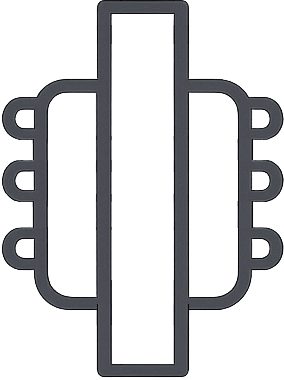
Each keypad has its own mechanical coding chamber. Both sides can share one code, or each side can run a different code - a shared entry code with a staff-only exit code, for example.

Either side can be set to free passage during business hours: enter that side's code and press F before you push the lever down - the lever then stays free and withdraws the bolt without a code until you cancel it. To cancel, press F then C. If free passage should never be available on a side, the F piece can be taken out of that side's coding chamber On The Bench (the BLSFTUMBLER puts it back). More on passage mode vs holdback mode.

Entirely mechanical - no power source, no wiring, no batteries to go flat. Weighing this against an app-connected lock? See mechanical digital vs smart locks and Buyer's Guide Chapter 16.

Internal offices, meeting rooms, storerooms and utility doors where both-sided code control plus after-hours key lockout is the requirement. Borg makes the BL5000 series for medium to heavy duty doors, with a strengthened clutch and coding chamber, and cycle tests it to 100,000 operations.

For relentless commercial traffic, step up to the Lockwood 3572DX, Borg BL7701, or Carbine CDL7200LL-HD - see what heavy duty actually means.
Each keypad holds one active PIN code at a time (the two sides can differ). No multi-user code list and no audit trail - the honest limitation of every mechanical digital lock; see what these locks will not do.
Access Methods
This is a mechanical digital lock with a lever keypad on both faces: the correct code opens the door from either side, and there is no free inside lever. A euro cylinder fitted to the lockcase (not supplied) is a lockout, not a way in - turned, it deadlocks the door and takes both keypads out of service; it never opens the door. There is no app, fob, card or key override on this model - for keyed entry on a back-to-back, see the BL5771MGPROECP in the range table below.
 Key Features
- Lever/lever back-to-back keypads - a code is required from both sides; no free inside egress.
- 60mm backset euro profile mortice lockcase - morticed into the door edge; a more substantial locking body than a tubular latch, with saw protection built into the bolt.
- Key lockout (code lockout) via euro cylinder - when the cylinder is deadlocked, both keypads are disabled until unlocked by key.
- Two euro escutcheons supplied to dress the cylinder position on both faces.
- Euro cylinder not included - we can supply one sized to your door and optionally keyed alike or master-keyed.
- Independent coding chambers - a different code can be set on each side.
- Free passage function (F button) per side - hold either side open during business hours.
- Medium to heavy duty BL5000 series - strengthened clutch and coding chamber, cycle tested to 100,000 operations (Borg BL5000 Series Brochure).
- On The Bench code change - over 2,000 combinations per side (Borg BL5000 Series Brochure); code length adjustable; digits entered in any order.
- Not for fire doors, emergency exit or fire egress doors - a code is required to exit from inside.
- Fully mechanical - no batteries, no wiring, no power source.
- Clutch protection on both levers - the lever spins freely without a valid code, so it cannot be forced.
- 8mm square drive spindle - compatible with most leading lock brands.
- Door thickness 35mm to 54mm on the standard fixings.
- Satin chrome finish - intended for internal doors.
- Reversible on site for left or right hand doors - no handed ordering.
 What's in the Box
- Borg BL5050SC outside lever keypad assembly (satin chrome)
- Inside lever keypad assembly - identical unit (satin chrome)
- 60mm backset euro profile mortice lockcase
- Euro profile strike plate and keep
- 2 x euro escutcheons (one per side, dressing the cylinder position)
- 2 x spindles (80mm and 90mm)
- M4 fixing screws (40mm, 50mm and 60mm options)
- 4 x 16mm screws
- 2 x coded code pieces (red - spare)
- 2 x non-coded code pieces (blue - spare)
- Tweezers (for the On The Bench code change)
- Hex wrench (Allen key)
- 2 x handle screw rubber grommets
Euro cylinder is not included - source one sized to your door thickness from our euro cylinders and barrels, or ask us. No batteries or wiring are required or supplied.
Suitable Uses
- Internal doors where both-sided code access is required alongside after-hours key lockout - the defining combination of this model.
- Offices, meeting rooms, server rooms and secure storerooms that are keypad-accessible during operating hours and key-deadlocked after close.
- Doors where the property or facilities manager must be able to fully disable keypad access with a key - without changing or removing any code.
- Applications where a euro mortice lockcase is specified or architecturally preferred over a tubular latch.
- Not for fire doors, emergency exit or fire egress doors - a code is needed to get out (see the warning above).
- Two-zone control using the independent chambers - shared entry code one side, staff-only code the other; see when to consider a double-sided lock.
 Available Finish
 Satin Chrome
(This Product)
Internal use
The BL5050SC is a single-finish, internal-grade model. For external or coastal doors, the tubular-latch BL5051 family offers external grade and Marine Grade Pro variants.
 Borg Back-to-Back Range Compared
Every model below puts a keypad on both sides of the door, all fully mechanical with no batteries. The differences are the lock format, the key function, the code change method and the weather grade.
ECP = Easicode Pro on-door code change. The BL5050SC is the only model in the table with the euro mortice format and the key lockout function - and the only one where a key can disable all code access without touching the codes.
 Accessories and Spare Parts
The BL5050SC shares the 5000-series keypad platform, so keypad-side spares carry over. The lock ships with its euro mortice lockcase, and can also be fitted with a Borg 5000 Series tubular latch in its place - the 60mm BLL5000 or the 70mm BLL500070, bought separately, or one you already have. The Lockwood 3572/3582 adaptor kits from the wider 5000 range do not apply to this euro mortice model and are not listed. Spare-parts depth is a core reason to buy a supported platform - see spare parts vs hardware store imitations.
Euro cylinders (keyed to differ, keyed alike or master-keyed), extra code pieces and spring service parts can all be arranged through us - start at euro cylinders and barrels. Spare coded (red) and non-coded (blue) code pieces ship in the box.
 Full Specifications
 Dimensions
The BL5050SC uses the same BL5000-series keypad body on both faces of the door - the inside unit is identical to the outside unit. The euro mortice case sits inside the door edge.

 Frequently Asked Questions
The mortice lockcase has a standard euro profile cylinder cutout. Fit a separately sourced euro cylinder and turn the key: the bolt deadlocks and the keypads will not operate the lock from either side - all code access is suspended, without changing or removing any code. Turn the key back and keypad access is restored instantly. Without a cylinder fitted, the lockout function is simply inactive and the lock runs as a standard code-only BTB unit.
Two things: the lock body and the key function. The BL5051 drives a 60mm tubular latch - a simpler bore-through install with external and marine finish options. The BL5050SC drives a euro mortice lockcase - a more substantial body morticed into the door edge - and adds the key lockout via euro cylinder. Choose the BL5050SC where the mortice format is specified or where a keyholder must be able to disable keypad access; choose the BL5051 for the simpler install or an external/coastal position.
On The Bench. Take the relevant keypad off the door, remove the 4 red screws, carefully lift the cover panel (springs attached), hold C down, and use the supplied tweezers to reposition the red (coded) and blue (uncoded) code pieces - square cut-outs outward, coloured marks upward. Each side is changed independently. Test the new code at least five times before rehanging - the full procedure is at the bench method guide, and read the traps first.
Yes. Each lever keypad has its own independent coding chamber. Both sides can share one code, or each can be set to a completely different code during the On The Bench code change - and the free passage function is engaged and released per side too.

Yes. Units ship factory set for right-hand doors. To change to left-hand: remove the rubber grommet at the base of each keypad handle, use the included hex wrench to remove the grub screw, rotate the handle 180 degrees and refit. Handing is determined from the outside of the door - right hand means hinges on the right. Background: understanding door handing in Australia.
 Additional Information

Monthly: wipe both keypads, both levers and the exposed bolt with a light spray of silicon-based lubricant (such as GT85) and remove the excess with a soft cloth. Do not use oil-based lubricants such as WD-40 - they attract dirt and wear down internal parts over time. Annually: remove the keypads from the door, spray the inside through the code piece holes on the reverse of each keypad with silicon-based lubricant, spray all fixings, accessories and the lockcase with silicon-based lubricant, then press each button and operate both levers several times to confirm smooth operation. Full steps are in the Borg Lock Servicing Guide (PDF).
Have the cylinder supplied and fitted by a locksmith who can confirm the correct length for your door thickness, key it to differ or keyed alike, and optionally fold it into the site's master keying system - our advice and installation team handles all of this. Keep lockout keys restricted to authorised holders, and if a key is lost, replace the cylinder rather than hoping.
The euro mortice lockcase requires a mortice pocket cut into the door edge with the 240mm faceplate recessed flush - a more involved installation than a tubular latch, typically needing a router or specialist drill guide. Verify the door construction suits morticing before specifying, or book the install with our advice and installation service.
This back-to-back lock needs a code to get out, and the key lockout can suspend code exit entirely - so it is not for fire doors, emergency exit or fire egress doors. For a fire door or a door on an exit path, choose a single-sided lock with a free inside lever - the BL5001 is fire tested to AS 1905.1-2005. See what is actually compliant on apartment fire doors.

The On The Bench method suits a set-and-forget code - and the key lockout means many sites never need to retire a code at all. But if codes must genuinely rotate (holiday lets, high staff turnover), the on-door Easicode Pro BTBs turn the bench job into a change on the door in about 10 seconds: BL5051MGECP or the marine BL5051MGPROECP - background at why ECP matters.
 Warranty
All Borg locks are warranted against mechanical defects in materials and workmanship under normal use and service for a minimum of 12 months from date of sale. The warranty does not cover damage arising from misuse, vandalism, or improper installation. The lock must not be dismantled - doing so will invalidate the warranty. Proof of purchase required for all claims.
 Download PDF Resources
Borg's manual for the On The Bench BL5000 series - parts, handing, the code change, the F button free passage function and troubleshooting. Its latch fitting page and drilling template are for the tubular latch models; this euro mortice lock's case follows the lockcase drawing in Dimensions.
Borg's five-page parts list, installation, On The Bench code change and troubleshooting guide for the BL5000 round bar lever series. The filename says ECP, but the method inside is the standard one used on this lock; its latch fitting steps are for the tubular latch models.
One-page drilling template (159mm hole centres, 60mm or 70mm backset) named for the BL5001, BL5201 and BL5401 tubular latch locks - on this euro mortice lock, use it for the keypad through-door holes only; the mortice pocket follows the lockcase drawing in Dimensions.
The BL5000 series in one page - handle styles, lock options including the lockcase and back-to-back models, features (over 2,000 combinations, 100,000 cycles, free passage), finishes and dimensioned drawings of the keypads and inside handles.
Borg's general maintenance guide for pushbutton keypad locks - monthly silicone-based lubricant care and an annual full service. This is the routine to follow for this lock.
Borg BL5050SC - FAQ, Setup and Owner's Guide
Everything below is here to help you buy, install, code and live with the BL5050SC euro mortice back-to-back lock. For the wider category, start with Buyer's Guide Chapter 16 - Mechanical Digital Locks and the pillar explainer What Is a Mechanical Digital Lock?
Key Lockout and the Euro Mortice
No - and the difference matters. A key override (as on the BL5771MGPROECP) lets a key open the door when the code is unknown. The BL5050SC's key lockout works the other way: the key cannot open the door, but it can deadlock it so that no code works at all. Override is a way in; lockout is a way to shut access down. Sites wanting both should look at the BL5771 for entry override, or run the BL5050SC with strict lockout-key control.
A standard euro profile cylinder sized to your door thickness - a 60mm (30/30) cylinder suits most doors in this model's 35-54mm range, but confirm the length with your locksmith before buying. Any reputable euro cylinder brand fits the profile cutout, which means the lockout key can be keyed to differ, keyed alike with other doors, or integrated into the site's master key system. We supply and key cylinders to order - start at euro cylinders and barrels.
No. Without a cylinder the lock operates as a standard code-only back-to-back unit and the two supplied escutcheons dress the cylinder position on both faces. The lockout capability simply waits until a cylinder is fitted - which can be done at any later date without disturbing the lock.
Three reasons: the case is a larger, more substantial body morticed into the door edge; the bolt carries saw protection (a hardened anti-saw element, marked A on the case drawing in the Dimensions tab); and the euro profile cutout is what makes the key lockout possible at all - a tubular latch has nowhere to put a cylinder. The trade-off is a more involved installation. The format decision in general is covered at latch vs bolt formats.
Treat the lockout key like an alarm code: last one out at night turns the key, first one in turns it back. Staff keep using the same PIN codes all year - the codes never need to change just because the building closes. If a lockout key is lost, replace the cylinder (a five-minute job on a euro profile) rather than re-coding anything.
Codes and Code Changing
Not quite. This is a purely mechanical coding chamber: each keypad holds one code, and the digits are pressed in any order - the chamber only cares that the correct set of buttons is depressed. Press C first to clear any half-entered attempt, enter the code, then turn the lever.
Yes. The codes can be set with the keypads on or off the door, but On The Bench is far easier - so set and verify both side codes before mounting. Know the current code, work with the door open, and test five times per side.
Allow 15-20 minutes per side the first time, including removal and refitting. The steps: keypad off the door, 4 red screws out, cover panel lifted carefully (springs attached), C held down, tweezers to move the red and blue code pieces, panel back on, five successful tests, then rehang. The honest time comparison across Borg's methods is at how long code changes take, and the method itself at the Borg standard method. Remember: the key lockout means you rarely need to change codes on this model at all.
Dropping a code piece (work over a tray), losing track of which code pieces came from which slots, coding the two sides differently by accident when they were meant to match, and rehanging without testing. The rules that prevent a lockout: know the current code, work with the door open, test five times per side. Full trap list: bench method traps.
Red code pieces are coded (that button becomes part of the PIN), blue are uncoded. The spares let you lengthen or shorten a code. Extra code pieces are available from us, and the free passage F piece (BLSFTUMBLER) is sold separately - see spare code pieces explained.
No - one active code per keypad, no user list, no audit trail. That is the honest trade-off of every mechanical digital lock against an app-based system: see what these locks will not do and mechanical vs smart compared. The compensation here is the key lockout - access can be suspended entirely without touching a code.
Fit and Installation
More involved than a tubular latch: a mortice pocket is cut into the door edge, the 240mm x 24mm faceplate is recessed flush, the euro cylinder position is drilled through, and the keypad through-door prep is drilled to the template. A router or specialist drill guide makes the pocket straightforward on timber; verify the door construction suits morticing first. The keypad drilling prep is on the drilling template (PDF), and our advice and installation service covers the Gold Coast if you would rather not cut the pocket yourself.

Two spindles are supplied (80mm and 90mm). The rule: door thickness + 30mm = minimum spindle length, because 15mm must seat into each keypad body. Use the longest that fits, and if cutting is needed, cut from the inside handle end only. The 8mm square drive is the common Australian standard, compatible with most leading lock brands.

No. A back-to-back lock needs a code to get out - and on this model the key lockout can suspend code exit entirely - so it is not for fire doors, and not for emergency exit or fire egress doors. For a fire door, choose a single-sided lock with a free inside lever: the BL5001 is fire tested to AS 1905.1-2005 (up to 4 hours, depending on the type of doorset). Background: exit paths, fire door certification, and why passage functions are not a fire-door fix.
For an internal secure room the mechanical case is simple: nothing to charge, nothing to pair, no firmware, and the key lockout replaces the "disable user" button an app would give you. The honest comparison is at the realities of electronic door locks and Ch 16 mechanical vs smart.
Range and Spares
It is the euro mortice member of the BTB family - the only one with the key lockout. The BL5051 is the tubular-latch equivalent (with external and marine finishes), the BL5051MGECP and BL5051MGPROECP add on-door code change, and the BL5771MGPROECP adds keyed entry override. Borg's naming decoded explains the suffix system.
Yes - on the tubular-latch platform: the BL5151SC knob/lever hybrid. The BL5101 is a knob keypad too, but it is single-sided, not a BTB. Neither offers the euro mortice or key lockout - the BL5050SC is the only BTB with those. Note knobs are harder to operate with full hands or limited grip; the lever remains the accessible choice.
The keypad-side parts carry over from the 5000-series platform: the keypad unit itself (BL5000KSC, satin chrome), the scar plates, the gaskets and the F piece - see the Accessories table. And because the cylinder is a standard euro profile, the lockout cylinder itself is a commodity part any locksmith can replace or re-key in minutes. That serviceability is the gap between a supported platform and a hardware store lookalike.

It is a medium to heavy duty lock - Borg makes the BL5000 series for medium to heavy duty doors - but it is not built for extremely high traffic without a servicing schedule. For genuinely relentless traffic, step up to a true heavy-duty platform: the Borg BL7701, Lockwood 3572DX (itself a mortice-format mech-digi) or the dual-keypad Carbine CDL7200LL-KDSC-HD. Guidance at Ch 16 commercial use.
Servicing
Monthly, a light wipe of both keypads, both levers and the exposed bolt with a silicon-based lubricant (such as GT85) - never an oil-based lubricant such as WD-40. Once a year, take the keypads off the door, spray through the code piece holes on the back of each keypad and over the fixings and lockcase, then check every button and both levers. Renew the gaskets whenever a keypad comes off. Keypads, gaskets, scar plates and the F piece are all separately orderable (Accessories table, main tab), and the full schedule is in the Borg Servicing Guide (PDF Files tab).
Related Products, Guides and Chapters
This lock and its siblings: BL5051 - Tubular Latch BTB, Multi-Finish - BL5051MGECP - External Grade ECP - BL5051MGPROECP - Marine ECP Black - BL5771MGPROECP - BTB with Key Override - BL5000SC - Single-Sided Euro Mortice, Free Egress - BL5001 - Single-Sided, Free Egress - BL5101 - Single-Sided Knob Keypad - BL5151SC - Knob/Lever BTB
Accessories and spares: Spare Lever Keypad (Satin Chrome) - F Piece (BLSFTUMBLER) - Spare Lever Keypad (Chrome Plate) - Stainless Scar Plates - Black Scar Plates - Rubber Gaskets - 8mm Spindle Set
Cross-brand alternatives: Lockwood 3572DX Mortice Mech-Digi - Carbine CDL7200LL-KDSC-HD Dual Keypad - Borg BL7701 Heavy Duty - Carbine CDL7200LL-HD Dual Lever
Buyer's Guide chapters: Ch 16 Mechanical Digital Locks - Ch 16 Borg Naming Decoded - Ch 16 Code Changing Methods - Ch 16 Choosing a Model
Helpful blog reading: Changing Codes - The Bench Method - Latch vs Bolt Formats - Why Double-Sided Locks Make Sense - Heavy Duty Commercial Mech-Digi - Passage Mode vs Holdback Mode - The Realities of Electronic Door Locks - Why Our Range Beats Imitations
What's In The Box - Borg BL5050SC
- Borg BL5050SC outside lever keypad assembly (satin chrome)
- Inside lever keypad assembly - identical unit (satin chrome)
- 60mm backset euro profile mortice lockcase
- Euro profile strike plate and keep
- 2 x euro escutcheons (one per side, dressing the cylinder position)
- 2 x spindles (80mm and 90mm)
- M4 fixing screws (40mm, 50mm and 60mm options)
- 4 x 16mm screws
- 2 x coded code pieces (red - spare)
- 2 x non-coded code pieces (blue - spare)
- Tweezers (for the On The Bench code change)
- Hex wrench (Allen key)
- 2 x handle screw rubber grommets
Borg BL5050SC - Dimensions
On this back-to-back model the inside unit is the same BL5000-series keypad body as the outside unit - both faces measure identically. The euro mortice case below sits inside the door edge.


Fixings suit doors 35-54mm on the standard kit. 8mm square drive spindle; 80mm and 90mm spindles supplied.
Borg BL5000 Series - Product Brochure

PDF Files - Borg BL5050SC
Borg's manual for the On The Bench BL5000 series - parts, handing, the code change, the F button free passage function and troubleshooting. Its latch fitting page and drilling template are for the tubular latch models; this euro mortice lock's case follows the lockcase drawing in Dimensions.
Borg's five-page parts list, installation, On The Bench code change and troubleshooting guide for the BL5000 round bar lever series. The filename says ECP, but the method inside is the standard one used on this lock; its latch fitting steps are for the tubular latch models.
One-page drilling template (159mm hole centres, 60mm or 70mm backset) named for the BL5001, BL5201 and BL5401 tubular latch locks - on this euro mortice lock, use it for the keypad through-door holes only; the mortice pocket follows the lockcase drawing in Dimensions.
The BL5000 series in one page - handle styles, lock options including the lockcase and back-to-back models, features (over 2,000 combinations, 100,000 cycles, free passage), finishes and dimensioned drawings of the keypads and inside handles.
Borg's general maintenance guide for pushbutton keypad locks - monthly silicone-based lubricant care and an annual full service. This is the routine to follow for this lock.
Borg Locks Warranty
Borg products sold in Australia are covered against mechanical defects in materials and workmanship under normal use and service. Warranty claims are handled by Terry's Tradies Pty Ltd and its associated websites, trading names, and subsidiaries.
Warranty Summary
What the Warranty Covers
- Mechanical defects in materials and workmanship
- Defects arising under normal use and service conditions
- Repair or replacement of defective units at the discretion of the Australian distributor (LSC)
 What the Warranty Does Not Cover
- Damage arising from misuse, vandalism, or abuse
- Damage resulting from improper installation
- Locks that have been dismantled - dismantling invalidates the warranty
- Normal wear and tear
- Cosmetic damage not affecting function
 How to Make a Claim
- Contact Terry's Tradies Pty Ltd first if you purchased through us or one of its associated trading names - we will assess the issue and manage the warranty process with LSC on your behalf. You do not need to contact LSC or Borg Locks UK directly.
- Have your proof of purchase ready (receipt or order confirmation).
- Warranty claims for Borg products in Australia are processed through LSC, the authorised Australian importer and distributor. Where an item is returned to LSC, freight charges must be prepaid and the item returned within the warranty period.
- If LSC finds the returned item to be defective, it will be repaired or replaced, and a detailed assessment report is provided to the customer after examination.
Our goods come with guarantees that cannot be excluded under the Australian Consumer Law. You are entitled to a replacement or refund for a major failure and compensation for any other reasonably foreseeable loss or damage. You are also entitled to have the goods repaired or replaced if the goods fail to be of acceptable quality and the failure does not amount to a major failure. The Borg manufacturer warranty above operates alongside - and does not limit - these statutory rights.

Confused? Overwhelmed? We get it.
Choosing the right smart lock can be genuinely tricky - door types, backsets, app platforms, compatibility with your existing hardware... there is a lot to consider. We have decades of experience fitting locks of all types, including smart locks, and we are happy to help.
Our expert recommendation service is free. Upload a few photos of your door and describe what you need, and one of our qualified locksmiths will give you a personalised recommendation.
Get Your Free Recommendation →How it works - three easy steps:
1. Upload photos
A few clear shots of your door, lock and frame - inside and out.
2. We assess
Our locksmith reviews your setup and requirements - door type, weather exposure, how you want to use it.
3. You get a recommendation
A personalised recommendation tailored to your door, budget and needs. No pressure, no upsell.
Also useful while you are deciding:


